
Birefringent Crystals Drive New Developments in Advanced Optical Technology and Photonics Applications
Release Time:
2026-08-03
outline: Customize birefringent crystals provide precise polarization control, excellent optical performance, and tailored solutions for advanced laser and photonics applications.
Growing Demand Accelerates Innovation in Optical Crystal Technology
The global photonics industry is witnessing rapid growth as advanced optical components become increasingly important in laser systems, communication technologies, scientific research, and precision measurement applications. Among these key materials, birefringent crystals are attracting significant attention due to their unique ability to control polarized light and improve the performance of advanced optical systems.
Birefringent crystals are special optical materials that exhibit different refractive indexes depending on the polarization direction of incoming light. This unique optical property allows a single light beam to separate into two beams with different polarization states, known as ordinary and extraordinary rays. Because of this capability, birefringent crystals have become essential components in modern polarization control and light manipulation technologies.
Unique Optical Properties Support Precision Applications
The main feature of birefringent crystals is their ability to create controlled phase differences between polarized light beams. This characteristic makes them widely used in optical devices such as waveplates, polarizers, beam splitters, and interferometers.
By accurately controlling light polarization, birefringent crystals help improve the stability and efficiency of optical systems. They are commonly used in laser equipment, imaging instruments, optical communication devices, and scientific research systems that require precise light management.

Advanced Laser Systems Increase Market Demand
The development of laser technology has created new opportunities for birefringent crystal applications. In laser systems, polarization control is critical for maintaining beam quality, improving energy transmission, and achieving accurate optical performance.
Birefringent crystals are widely used in laser wavelength control, frequency conversion systems, and polarization adjustment components. Their excellent optical transparency and stable performance make them suitable for high-precision laser applications across industries including manufacturing, medical technology, and scientific research.
Customized Crystal Solutions Meet Diverse Industry Needs
As optical systems become more specialized, demand for customized birefringent crystals continues to increase. Different applications require specific crystal materials, sizes, surface finishes, and optical parameters.
Professional manufacturers provide customized solutions based on customer requirements, including crystal orientation, thickness, coating options, and dimensional accuracy. These customized products help engineers design more efficient and reliable optical systems for different applications.
Key Materials Enable High-Performance Optical Devices
Various materials are used to manufacture birefringent crystals, including quartz, calcite, lithium niobate, and other advanced optical crystals. Each material offers different optical characteristics, allowing manufacturers and researchers to select suitable solutions according to specific application requirements.
For example, quartz crystals are valued for their excellent stability and durability, while calcite crystals provide strong birefringence effects for polarization separation. Advanced crystal materials continue to support innovation in optical technology.
Applications Expand Across Multiple Industries
Birefringent crystals are used in a wide range of industries due to their excellent polarization control capabilities. In telecommunications, they support optical signal processing and polarization management. In scientific research, they are important components in spectroscopy, microscopy, and interferometry systems.
In medical and biomedical equipment, birefringent crystals contribute to advanced imaging technologies and diagnostic instruments. Their precise optical characteristics allow researchers and engineers to develop more accurate and efficient devices.
Manufacturing Technology Improves Crystal Performance
Continuous improvements in crystal growth techniques and optical processing technologies are helping manufacturers produce higher-quality birefringent crystals. Advanced manufacturing methods improve optical clarity, reduce defects, and enhance consistency between products.
Surface polishing, precision cutting, and specialized coating technologies further improve the performance of birefringent crystals, enabling their use in increasingly demanding optical environments.
Future Trends Focus on Photonics and Smart Optical Systems
With the rapid development of photonics, quantum technologies, and optical communication systems, the demand for high-performance birefringent crystals is expected to continue growing. Future innovations will focus on improving optical efficiency, expanding material choices, and developing more customized solutions.
As industries move toward higher precision and smarter technologies, birefringent crystals will continue playing an important role in controlling and optimizing light-based systems.
Conclusion
Birefringent crystals are essential optical materials that provide precise polarization control and reliable light management capabilities. Their unique optical properties, wide application range, and customization flexibility make them valuable components in modern photonics technology.
With continuous advancements in optical manufacturing and increasing demand for high-performance optical solutions, birefringent crystals will remain a key material supporting the future development of lasers, communication systems, scientific instruments, and advanced optical technologies.

The Fascinating World of Birefringent Crystals: Unlocking Optical Phenomena
outline: Birefringent crystals are a remarkable class of materials that exhibit unique optical properties, specifically the phenomenon of double refraction. When light passes through these crystals, it is split into two distinct rays, each traveling at different speeds and refracting at different angles. This unique behavior arises due to the anisotropic nature of the crystal structure, where the refractiv
2026-09-15
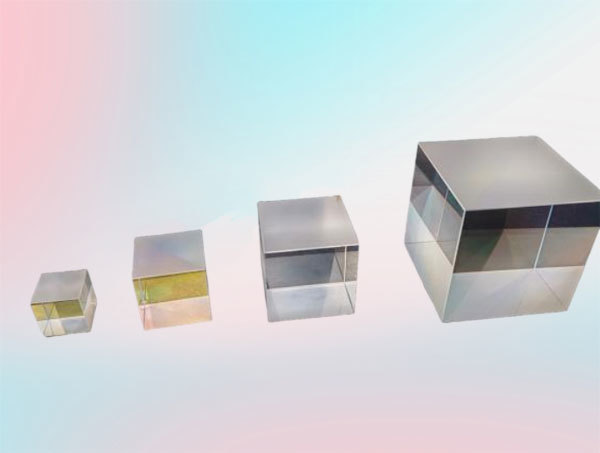
The Role of Polarizing Optics in Reducing Glare in Displays
outline: The Role of Polarizing Optics in Reducing Glare in Displays Introduction to Polarizing Optics Polarizing optics play a crucial role in modern display technologies by reducing glare and enhancing visual quality. **Glare** is a common issue that can significantly affect the viewing experience, causing discomfort and reducing the clarity of images. Understanding how polarizing optics function can hel
2026-09-12
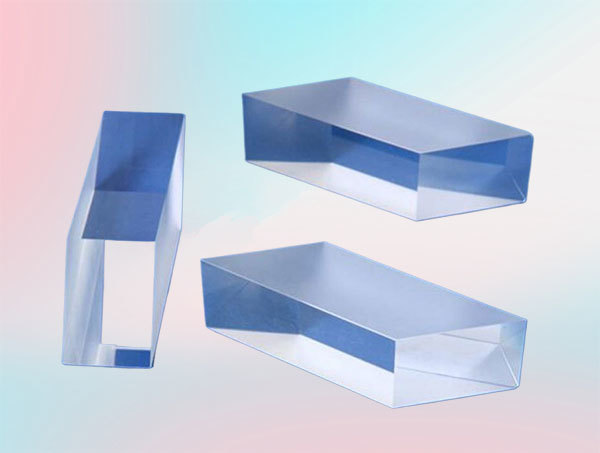
Understanding Optical Prisms: Essential Components in Photonic Applications
outline: Optical prisms are essential devices used in various photonic applications, serving to manipulate light in precise ways. Their primary function is to refract and disperse light, altering its path and spectral composition. This capability is crucial in numerous applications, from imaging systems to communication technologies. One of the most common types of optical prisms is the triangular prism, w
2026-09-09
