
Optical Prisms in Telecommunications: Enhancing Signal Clarity for Seamless Communication
Release Time:
2025-11-18
outline: Optical Prisms in Telecommunications: Enhancing Signal Clarity Understanding Optical Prisms and Their Functionality Optical prisms are essential components in the realm of telecommunications, serving the vital function of manipulating light to enhance signal clarity. These geometric solids, typically made from glass or other transparent materials, refract light when it passes through them, allowin
Optical Prisms in Telecommunications: Enhancing Signal Clarity
Understanding Optical Prisms and Their Functionality
Optical prisms are essential components in the realm of telecommunications, serving the vital function of manipulating light to enhance signal clarity. These geometric solids, typically made from glass or other transparent materials, refract light when it passes through them, allowing for various applications in optical systems. They operate on the principle of refraction, where light changes direction as it travels from one medium to another. This fundamental property is harnessed in telecommunications to improve data transmission quality, reduce signal loss, and enhance overall communication efficiency.
The Role of Optical Prisms in Telecommunications
Enhancing Signal Clarity and Quality
In telecommunications, **signal clarity** is paramount for effective communication. Optical prisms enhance clarity by minimizing distortions and allowing for precise control of light paths. When signals are transmitted over long distances, they often encounter various obstacles that can lead to attenuation and interference. By strategically placing optical prisms within communication systems, engineers can ensure that light signals maintain their integrity, thereby reducing errors and enhancing data quality.
Types of Optical Prisms Used in Telecommunication Systems
Several types of optical prisms are utilized in telecommunications, each serving unique purposes:
- Right-Angle Prisms: These prisms are commonly used for light reflection and are particularly effective in redirecting light paths within fiber optic systems.
- Dispersion Prisms: Dispersion prisms separate light into its constituent colors, which can be useful for analyzing signal wavelengths and optimizing transmission.
- Beam Splitters: Used to divide a light beam into two or more paths, beam splitter prisms are essential in multiplexing applications, allowing multiple signals to be transmitted simultaneously.
The Science Behind Signal Clarity Enhancement
Refraction and Total Internal Reflection
The underlying principles of refraction and total internal reflection are critical to understanding how optical prisms improve signal clarity in telecommunications. Refraction occurs when light enters a prism at an angle, bending as it transitions from air to the denser material of the prism. This bending effect allows for precise control over the direction of the light beam.
Total internal reflection, on the other hand, is a phenomenon that occurs when light hits the boundary of a denser medium at a steep angle, reflecting entirely back into the medium. This property is exploited in fiber optic cables, where optical prisms help maintain high signal fidelity over long distances. By ensuring that light remains contained within the fiber, prisms play a critical role in minimizing signal loss.
Reducing Signal Loss and Interference
Signal loss and interference can severely impact communication quality in telecommunications. Optical prisms contribute to reducing these issues by refining light paths and mitigating the effects of external factors. With advancements in prism technology, engineers can design systems that not only maintain signal strength but also enhance clarity, allowing for uninterrupted communication.
Applications of Optical Prisms in Telecommunications
Fiber Optic Communication
One of the most significant applications of optical prisms is in fiber optic communication systems. These systems rely on the principles of light transmission through thin strands of glass or plastic. Prisms are strategically integrated into these systems to optimize light paths, enhancing signal clarity and ensuring efficient data transfer. By minimizing signal attenuation and maximizing efficiency, optical prisms are indispensable in modern telecommunications networks.
Laser Communication Systems
In laser communication systems, optical prisms are used to manipulate laser beams for various purposes, including beam shaping and direction control. Prisms can ensure that the laser light is focused and directed accurately, which is essential for maximizing communication distances and minimizing losses.
Television and Broadcasting
Optical prisms also play a vital role in television and broadcasting technology. By utilizing prisms in cameras and broadcasting equipment, manufacturers can enhance image quality and ensure that signals are transmitted accurately. This application is crucial for delivering high-definition content to viewers.
Challenges and Innovations in Optical Prism Technology
Addressing Signal Distortion
Despite their advantages, optical prisms can introduce signal distortion if not designed or implemented correctly. Engineers face the challenge of optimizing prism design to minimize these distortions. Innovations in material science and manufacturing techniques are enabling the development of prisms that can better handle the complexities of light manipulation in telecommunications.
Advancements in Material Science
The evolution of optical prism technology is closely linked to advancements in material science. New materials, such as plastics with enhanced optical properties, are being explored to create lighter and more versatile prisms. These materials not only improve performance but also reduce costs, making optical prisms more accessible in telecommunications applications.
The Future of Optical Prisms in Telecommunications
Integration with Emerging Technologies
The future of optical prisms in telecommunications is promising, especially with the integration of emerging technologies. Innovations such as quantum communication and advanced signal processing techniques stand to benefit significantly from the capabilities of optical prisms. As telecommunications systems continue to evolve, the demand for efficient light manipulation will grow, positioning optical prisms as critical components in next-generation communication systems.
Potential Developments in Optical Prism Design
Future developments in optical prism design will likely focus on enhancing performance metrics such as transmission efficiency, durability, and versatility. Researchers are working on designs that can adapt to varying communication environments, ensuring optimal performance in any situation. This adaptability will be crucial as telecommunications networks expand and evolve to meet the demands of an increasingly connected world.
FAQs About Optical Prisms in Telecommunications
1. What are optical prisms used for in telecommunications?
Optical prisms are used to manipulate light signals, enhancing signal clarity, reducing distortion, and improving overall data transmission quality in telecommunications systems.
2. How do optical prisms improve signal clarity?
By refracting light and minimizing signal loss, optical prisms ensure that data transmitted over long distances remains intact and clear, reducing the chance of errors in communication.
3. What types of prisms are utilized in fiber optic systems?
Common types include right-angle prisms, dispersion prisms, and beam splitter prisms, each serving specific functions to optimize light transmission.
4. Can optical prisms mitigate signal interference?
Yes, optical prisms help minimize signal interference by refining the paths of light signals, thus enhancing the quality and clarity of the transmitted data.
5. What is the future outlook for optical prisms in telecommunications?
The future is bright, with advancements in material science and integration with emerging technologies promising to elevate the role of optical prisms in next-generation telecommunication systems.
Conclusion
Optical prisms are indispensable tools in the telecommunications industry, playing a crucial role in enhancing signal clarity and overall communication efficiency. Their ability to manipulate light through the principles of refraction and total internal reflection makes them invaluable in various applications, particularly in fiber optic systems and laser communication. As technology continues to advance, the integration of optical prisms with emerging innovations will further solidify their importance in developing robust and efficient telecommunication networks. Embracing these advancements is essential for stakeholders looking to improve communication systems and ensure high-quality data transmission in an ever-evolving digital landscape.

The Advantages of Using Birefringent Crystals in Optical Engineering
outline: The Advantages of Using Birefringent Crystals in Optical Engineering Table of Contents 1. Introduction to Birefringent Crystals 2. Understanding Birefringence 3. Unique Properties of Birefringent Crystals 4. Applications of Birefringent Crystals in Optical Engineering 4.1 Wave Plates 4.2 Polarizers 4.3 Interferometer
2025-12-16
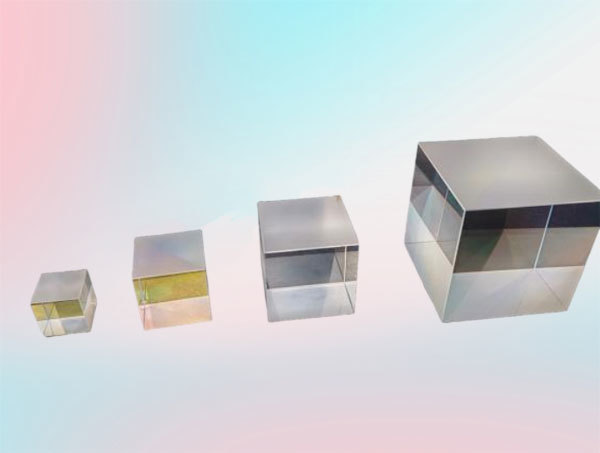
Understanding Polarizing Optics: Enhancing Visual Clarity in Electronics
outline: Polarizing optics is a fascinating field that deals with the behavior of light waves as they interact with materials that can filter and manipulate light. This technology is widely used in various electronic components, especially in optoelectronic devices. Understanding the principles of polarizing optics can significantly enhance the performance of these devices, leading to clearer images and mo
2025-12-14

The Fundamentals of Optical Prism Geometry and Its Practical Applications
outline: The Fundamentals of Optical Prism Geometry and Its Practical Applications Table of Contents 1. Introduction to Optical Prisms 2. Understanding Geometric Properties of Prisms 3. Types of Optical Prisms 4. Light Refraction in Prisms 5. Applications of Optical Prisms 5.1 Prisms in Optical Instruments 5.2 Prisms in Spectroscopy 5.3 Pris
2025-12-12