
The Advantages of Using Birefringent Crystals in Optical Engineering
Release Time:
2025-12-16
outline: The Advantages of Using Birefringent Crystals in Optical Engineering Table of Contents 1. Introduction to Birefringent Crystals 2. Understanding Birefringence 3. Unique Properties of Birefringent Crystals 4. Applications of Birefringent Crystals in Optical Engineering 4.1 Wave Plates 4.2 Polarizers 4.3 Interferometer
The Advantages of Using Birefringent Crystals in Optical Engineering
Table of Contents
- 1. Introduction to Birefringent Crystals
- 2. Understanding Birefringence
- 3. Unique Properties of Birefringent Crystals
- 4. Applications of Birefringent Crystals in Optical Engineering
- 5. Advantages of Using Birefringent Crystals
- 6. Challenges in Using Birefringent Crystals
- 7. Future Directions in Optical Engineering
- 8. Conclusion
- 9. Frequently Asked Questions
1. Introduction to Birefringent Crystals
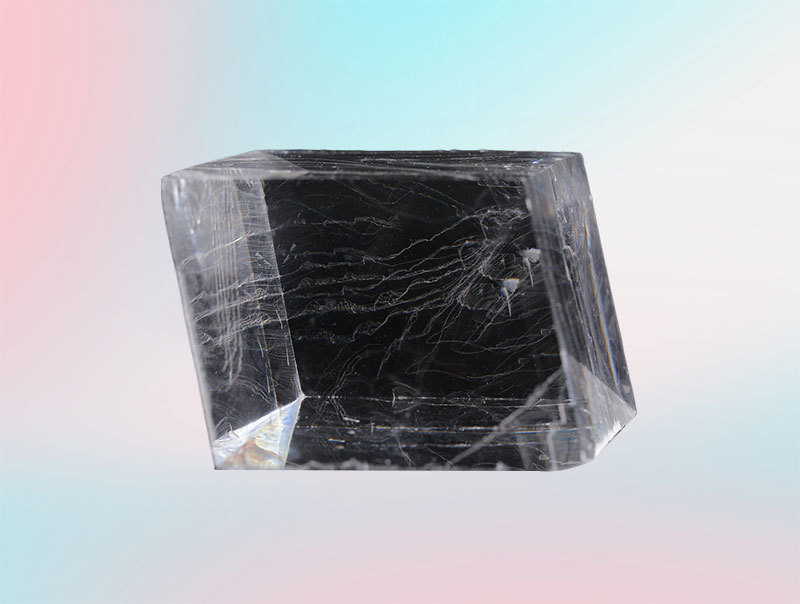
Birefringent crystals play a pivotal role in optical engineering, providing unique solutions for a variety of applications. These crystals exhibit two different indices of refraction depending on the polarization and propagation direction of light. This phenomenon is not only fascinating but also incredibly useful in designing advanced optical devices. In this article, we will explore the fundamental properties of birefringent crystals and their broad applications across the optical spectrum.
2. Understanding Birefringence
Birefringence, also known as double refraction, occurs when a crystal has different refractive indices along different crystallographic axes. This results in the separation of light into two rays when it enters the crystal. The ordinary ray follows Snell's law, while the extraordinary ray bends at a different angle, leading to distinctive optical effects that can be harnessed in various technologies. Understanding the basis of birefringence is critical for professionals in optical engineering, as it lays the groundwork for the applications discussed later in this article.
3. Unique Properties of Birefringent Crystals
Birefringent crystals possess several unique properties that make them invaluable in optical engineering:
1. **Anisotropic Behavior**: Unlike isotropic materials, which have the same properties in all directions, birefringent crystals can manipulate light in specific ways depending on its polarization.
2. **Phase Shift**: Birefringent materials can introduce a phase shift between the ordinary and extraordinary rays, enabling applications in phase modulation.
3. **Polarization Control**: They can selectively control the polarization state of light, making them essential for devices that rely on polarized light.
These properties pave the way for innovative optical components such as wave plates and polarized filters.
4. Applications of Birefringent Crystals in Optical Engineering
Birefringent crystals find myriad applications in optical engineering, enhancing performance in various devices. Below are some notable examples.
4.1 Wave Plates
Wave plates, or optical compensators, utilize birefringent crystals to alter the phase relationship between light rays. By introducing a specific optical path difference, these devices can convert linearly polarized light into circularly polarized light and vice versa. They are widely used in lasers, microscopy, and telecommunications.
4.2 Polarizers
Birefringent crystals can function as polarizers, selectively transmitting light of a particular polarization state while blocking others. This property is crucial in various applications, including LCD technology, photography, and optical instrumentation, where controlling light polarization is essential.
4.3 Interferometers
In optical interferometry, birefringent crystals are used to create beamsplitters and optical delay lines. These components enhance measurement precision in applications like metrology and fiber optics, enabling the detection of minute changes in optical path length.
4.4 Display Technologies
Birefringent materials are integral to modern display technologies such as LCDs and OLEDs. They enhance contrast and color reproduction by manipulating polarized light effectively, thus improving the overall visual experience.
5. Advantages of Using Birefringent Crystals
The advantages of incorporating birefringent crystals into optical engineering are numerous and significant.
5.1 High Efficiency
Birefringent crystals exhibit high efficiency in light manipulation, allowing devices to operate at peak performance with minimal energy loss. This efficiency is particularly beneficial in applications requiring high light transmission rates, such as optical communications.
5.2 Temperature Stability
Birefringent crystals maintain their optical properties across a wide range of temperatures, making them suitable for applications in harsh environments. This temperature stability ensures consistent performance and reliability in optical systems.
5.3 Wide Bandwidth
Birefringent materials can operate effectively across a broad spectrum of wavelengths. This versatility makes them ideal for applications in multi-wavelength systems, enhancing their value in diverse optical engineering projects.
6. Challenges in Using Birefringent Crystals
While birefringent crystals offer many advantages, there are challenges associated with their use. One significant challenge is the manufacturing process, which can be complex and costly. Additionally, the alignment of birefringent crystals within optical systems is crucial, as misalignment can lead to reduced performance and efficiency. Understanding these challenges helps professionals in optical engineering navigate the complexities of utilizing birefringent materials effectively.
7. Future Directions in Optical Engineering
The future of optical engineering with birefringent crystals looks promising. Innovations in material science and manufacturing techniques are expected to enhance the performance and applicability of these crystals. Advances in nanotechnology may lead to the development of new birefringent materials with even more specialized properties, paving the way for novel optical devices and applications.
8. Conclusion
Birefringent crystals are essential components in the field of optical engineering, offering unique properties and a wide range of applications. Their ability to manipulate light efficiently, maintain stability across various conditions, and operate over broad wavelengths makes them invaluable in modern optical devices. As technology continues to evolve, the role of birefringent crystals will undoubtedly expand, driving innovation in optical engineering.
9. Frequently Asked Questions
What are birefringent crystals?
Birefringent crystals are materials that have two distinct indices of refraction, leading to the phenomenon of double refraction. This property allows them to manipulate light in unique ways.
How are birefringent crystals used in optical devices?
They are used in various optical devices such as wave plates, polarizers, and interferometers, where their ability to control light polarization and phase is essential.
What are the benefits of using birefringent materials in optical systems?
The benefits include high efficiency, temperature stability, and a wide operational bandwidth, enhancing the performance of optical devices.
Are there any downsides to using birefringent crystals?
Yes, challenges such as the complexity and cost of manufacturing, as well as the need for precise alignment within optical systems, can affect their implementation.
What is the future of birefringent crystals in optical engineering?
The future looks bright with potential advancements in materials science and technology, leading to new applications and improved performance of birefringent crystals in optical devices.
The Advantages of Using Birefringent Crystals in Optical Engineering
outline: The Advantages of Using Birefringent Crystals in Optical Engineering Table of Contents 1. Introduction to Birefringent Crystals 2. Understanding Birefringence 3. Unique Properties of Birefringent Crystals 4. Applications of Birefringent Crystals in Optical Engineering 4.1 Wave Plates 4.2 Polarizers 4.3 Interferometer
2025-12-16
Understanding Polarizing Optics: Enhancing Visual Clarity in Electronics
outline: Polarizing optics is a fascinating field that deals with the behavior of light waves as they interact with materials that can filter and manipulate light. This technology is widely used in various electronic components, especially in optoelectronic devices. Understanding the principles of polarizing optics can significantly enhance the performance of these devices, leading to clearer images and mo
2025-12-14

The Fundamentals of Optical Prism Geometry and Its Practical Applications
outline: The Fundamentals of Optical Prism Geometry and Its Practical Applications Table of Contents 1. Introduction to Optical Prisms 2. Understanding Geometric Properties of Prisms 3. Types of Optical Prisms 4. Light Refraction in Prisms 5. Applications of Optical Prisms 5.1 Prisms in Optical Instruments 5.2 Prisms in Spectroscopy 5.3 Pris
2025-12-12