
Birefringent Crystals: Transforming Light for Innovative Electronics
Release Time:
2025-11-20
outline: Birefringent Crystals: Transforming Light for Innovative Electronics Table of Contents 1. Understanding Birefringence: The Optical Phenomenon 2. The Science Behind Birefringent Crystals 3. Types of Birefringent Crystals and Their Unique Properties 4. Applications of Birefringent Crystals in Modern Electronics 5. Birefringent Crystals in Optical Devices 6. Innovations Driven by Birefringent Materia
Birefringent Crystals: Transforming Light for Innovative Electronics
Table of Contents
1. Understanding Birefringence: The Optical Phenomenon
2. The Science Behind Birefringent Crystals
3. Types of Birefringent Crystals and Their Unique Properties
4. Applications of Birefringent Crystals in Modern Electronics
5. Birefringent Crystals in Optical Devices
6. Innovations Driven by Birefringent Materials
7. Challenges in the Utilization of Birefringent Crystals
8. The Future of Birefringent Crystals in Electronics
9. FAQs About Birefringent Crystals and Their Applications
10. Conclusion: The Transformative Impact of Birefringent Crystals
1. Understanding Birefringence: The Optical Phenomenon
Birefringence, also known as double refraction, is an optical phenomenon observed in certain crystals where light is refracted into two distinct rays. This occurs due to the anisotropic nature of the crystal structure, which causes a variation in the speed of light based on its polarization and propagation direction. Understanding this phenomenon is crucial, as it lays the foundation for numerous applications in the electronics and optics fields.
When light enters a birefringent crystal, it experiences different refractive indices depending on its polarization state. This results in the splitting of light into two beams with different velocities, leading to fascinating optical effects. The combined interaction of these two rays results in unique visual displays, making birefringent crystals essential for many innovative technologies.
2. The Science Behind Birefringent Crystals
Birefringent crystals possess a unique molecular arrangement that allows for the differential behavior of light. The two principal axes of a birefringent material—known as the ordinary ray (o-ray) and the extraordinary ray (e-ray)—behave distinctly under polarization.
The ordinary ray follows Snell's law, where its velocity is constant regardless of the polarization direction. In contrast, the extraordinary ray exhibits a variable velocity, which depends on the angle of incidence and the polarization state of light. This difference facilitates various applications in the optical domain, from filters to advanced imaging systems.
3. Types of Birefringent Crystals and Their Unique Properties
Several types of birefringent crystals exhibit unique optical properties that are leveraged in various applications. Noteworthy examples include:
3.1 Calcite
Calcite is a widely used birefringent crystal known for its high optical clarity and strong birefringence. It finds applications in polarizers and optical instruments, allowing for precise measurements and imaging.
3.2 Quartz
Quartz is another common birefringent material with excellent thermal stability and mechanical strength. Its applications span across electronics, telecommunications, and sensors, where it serves as a fundamental component in various devices.
3.3 Lithium Niobate
Lithium niobate is a versatile birefringent crystal used in nonlinear optics and photonics. It is particularly effective in creating electro-optic devices, such as modulators and frequency converters, due to its high electro-optic coefficients.
3.4 Potassium Titanyl Phosphate (KTP)
KTP is celebrated for its efficient nonlinear optical properties, making it a popular choice in laser technology. Its ability to convert wavelengths and facilitate frequency doubling is vital for numerous applications in scientific research and telecommunications.
4. Applications of Birefringent Crystals in Modern Electronics
Birefringent crystals are instrumental in a variety of electronic applications. Their unique optical characteristics enable advancements in several fields, including:
4.1 Optical Communication
In the realm of optical communication, birefringent crystals play a pivotal role in enhancing signal quality and reducing noise. They are used in fiber optic systems to manage polarization and improve data transmission efficiency.
4.2 Imaging Systems
Birefringent materials are utilized in imaging systems, such as high-resolution microscopes and cameras. Their ability to manipulate light allows for enhanced contrast and clarity in images, facilitating better analysis in various scientific fields.
4.3 Sensors
Sensors leveraging birefringent crystals are employed in numerous applications, including environmental monitoring and industrial automation. These sensors can detect changes in light polarization, providing real-time data for various processes.
5. Birefringent Crystals in Optical Devices
Optical devices heavily rely on birefringent crystals to perform a range of functions. These devices take advantage of the unique optical properties of birefringent materials to achieve desired outcomes.
5.1 Polarizers
Polarizers made from birefringent crystals are essential for controlling light transmission in various optical systems. They selectively filter out specific polarization states, allowing for precise manipulation of light.
5.2 Wave Plates
Wave plates utilize the birefringent properties of crystals to introduce phase shifts between the o-ray and e-ray. This characteristic is useful in adjusting the polarization state of light, making wave plates critical components in laser systems and optical instruments.
5.3 Beam Splitters
Birefringent beam splitters can divide a beam of light into two distinct components based on their polarization states. This capability is pivotal in applications like interferometry and holography, where precise light manipulation is crucial.
6. Innovations Driven by Birefringent Materials
Recent advancements in technology have led to new innovations driven by birefringent crystals. Researchers and engineers are continually exploring their potential in various fields, fostering the development of cutting-edge solutions.
6.1 Quantum Computing
The field of quantum computing is seeing significant interest in birefringent materials due to their potential in quantum state manipulation. Birefringent crystals can be utilized in creating quantum gates and entangled photon sources, paving the way for advancements in quantum technologies.
6.2 Biophotonics
Birefringent crystals have found applications in biophotonics, where they assist in imaging biological samples at the cellular level. Their ability to enhance contrast and resolution aids in medical diagnostics and research.
6.3 Laser Technology
In laser technology, birefringent materials are essential for developing high-performance lasers with specific output characteristics. Innovations in laser design often incorporate birefringent crystals to optimize performance for various applications.
7. Challenges in the Utilization of Birefringent Crystals
Despite their numerous advantages, the utilization of birefringent crystals comes with challenges that researchers and manufacturers face.
7.1 Manufacturing Complexity
The manufacturing process for birefringent crystals can be complex, often requiring precise control over conditions such as temperature and pressure. This complexity can lead to variations in quality and performance.
7.2 Temperature Sensitivity
Birefringent crystals can be sensitive to temperature fluctuations, which may affect their optical properties. This sensitivity necessitates careful design considerations in applications where temperature variations are expected.
7.3 Cost of High-Quality Crystals
High-quality birefringent crystals, such as lithium niobate and KTP, can be expensive to produce and procure. This cost can limit their widespread adoption in some applications.
8. The Future of Birefringent Crystals in Electronics
The future of birefringent crystals in the electronics industry looks promising, with ongoing research and development aimed at overcoming existing challenges and exploring new applications.
Advancements in materials science may lead to the discovery of new birefringent materials with enhanced properties. Additionally, as technologies such as quantum computing and biophotonics continue to grow, the demand for innovative solutions involving birefringent crystals is likely to increase.
9. FAQs About Birefringent Crystals and Their Applications
9.1 What are the primary applications of birefringent crystals?
Birefringent crystals are used in optical communication, imaging systems, sensors, polarizers, and wave plates, enhancing the performance of various electronic devices.
9.2 How do birefringent crystals affect light?
Birefringent crystals split light into two distinct rays based on their polarization state, resulting in unique optical effects and enabling precise manipulation of light.
9.3 Are all crystals birefringent?
No, only certain anisotropic crystals exhibit birefringence due to their unique molecular arrangements.
9.4 What challenges are associated with using birefringent crystals?
Challenges include manufacturing complexity, temperature sensitivity, and the cost of high-quality crystals.
9.5 How are birefringent crystals utilized in quantum computing?
Birefringent crystals can create quantum gates and entangled photon sources, aiding advancements in quantum technologies.
10. Conclusion: The Transformative Impact of Birefringent Crystals
Birefringent crystals are integral to advancing optical technologies and electronic innovations. Their unique properties allow for transformative applications that enhance performance across numerous fields. As research continues to unlock their potential, the future of birefringent crystals promises to be marked by exciting developments that will further revolutionize the electronics industry. Embracing these materials will undoubtedly pave the way for unprecedented advancements, reinforcing the role of birefringent crystals as a cornerstone of modern optical technology.
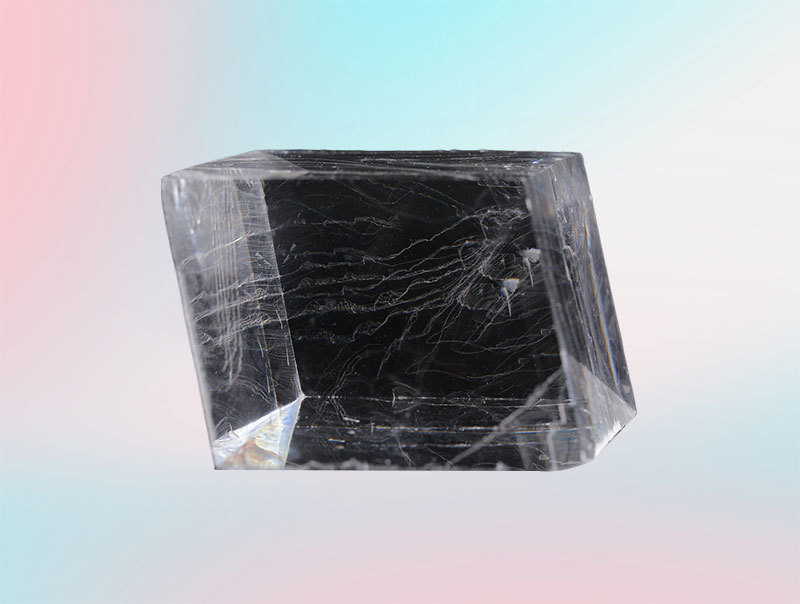
The Advantages of Using Birefringent Crystals in Optical Engineering
outline: The Advantages of Using Birefringent Crystals in Optical Engineering Table of Contents 1. Introduction to Birefringent Crystals 2. Understanding Birefringence 3. Unique Properties of Birefringent Crystals 4. Applications of Birefringent Crystals in Optical Engineering 4.1 Wave Plates 4.2 Polarizers 4.3 Interferometer
2025-12-16
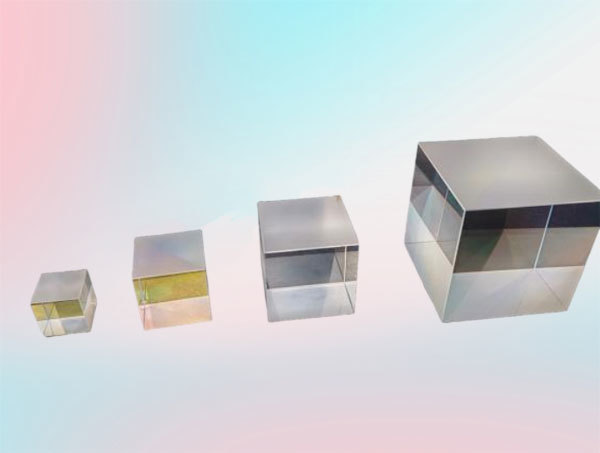
Understanding Polarizing Optics: Enhancing Visual Clarity in Electronics
outline: Polarizing optics is a fascinating field that deals with the behavior of light waves as they interact with materials that can filter and manipulate light. This technology is widely used in various electronic components, especially in optoelectronic devices. Understanding the principles of polarizing optics can significantly enhance the performance of these devices, leading to clearer images and mo
2025-12-14

The Fundamentals of Optical Prism Geometry and Its Practical Applications
outline: The Fundamentals of Optical Prism Geometry and Its Practical Applications Table of Contents 1. Introduction to Optical Prisms 2. Understanding Geometric Properties of Prisms 3. Types of Optical Prisms 4. Light Refraction in Prisms 5. Applications of Optical Prisms 5.1 Prisms in Optical Instruments 5.2 Prisms in Spectroscopy 5.3 Pris
2025-12-12