
Understanding Polarizing Optics: A Key to Enhanced Light Control
Release Time:
2026-01-29
outline: Polarizing optics is a specialized area within the field of optics that deals with the control and manipulation of light waves. Light, as an electromagnetic wave, can oscillate in various directions, and polarizing optics focuses on filtering this light to allow only waves oscillating in a specific direction to pass through. This concept is critical in various applications, especially in electroni
At its core, polarizing optics relies on the principle of polarization, which can occur naturally or be induced artificially. Natural polarization occurs when light reflects off surfaces or passes through certain types of materials, causing the light waves to oscillate in a specific direction. Artificial polarization is typically achieved using polarizing filters, such as polarizers and wave plates. These devices are integral in controlling light for various applications, including displays, cameras, and optical sensors.
In electronic components, polarizing optics plays a significant role in improving image clarity and contrast. For example, in liquid crystal displays (LCDs), polarizing filters are used to enhance brightness and reduce glare by controlling the light that enters the display. Similarly, in cameras, polarizing filters can enhance the color saturation and eliminate reflections, allowing for clearer images. This is particularly crucial in photography and videography, where capturing the right light conditions can dramatically affect the outcome.
Moreover, polarizing optics is essential in optical sensors where precise light measurement is required. By utilizing polarizers, these sensors can filter out unwanted light variations and focus on specific wavelengths, thus improving detection accuracy. This is particularly useful in applications such as environmental monitoring and industrial process control, where accurate readings are paramount.
Another significant application of polarizing optics is in the field of telecommunications. In fiber-optic communication, polarization can greatly influence signal integrity and transmission efficiency. By managing the polarization states of light, it is possible to minimize signal loss and maintain high data transfer rates over long distances.
Furthermore, advancements in materials science have led to the development of new polarizing optics technologies. Innovations such as liquid crystal polymers and advanced photonic crystals are paving the way for more efficient light control systems. These advancements not only enhance the performance of existing optical devices but also open new avenues for research and development in photonics.
In conclusion, polarizing optics is a vital technology in the realm of electronic components and light manipulation. Understanding its principles and applications can significantly enhance the design and functionality of various optical systems. Whether in consumer electronics, industrial applications, or advanced research, the ability to control light effectively is a cornerstone of modern technology.

The Intricacies and Applications of Polarized Optical Components in Photonics
outline: Polarized optical components play a pivotal role in the field of photonics, enabling the control and manipulation of light in various applications. These components are designed to filter, reflect, and transmit light waves based on their polarization state, enhancing the performance of optical systems. The primary function of polarized optical components is to separate light waves into distinct po
2026-02-02

Polarizing Optics Drive New Advances in Precision Imaging and Photonics
outline: Polarizing optics control light polarization to reduce glare, enhance contrast, and enable precise analysis in optical and photonic systems
2026-02-02
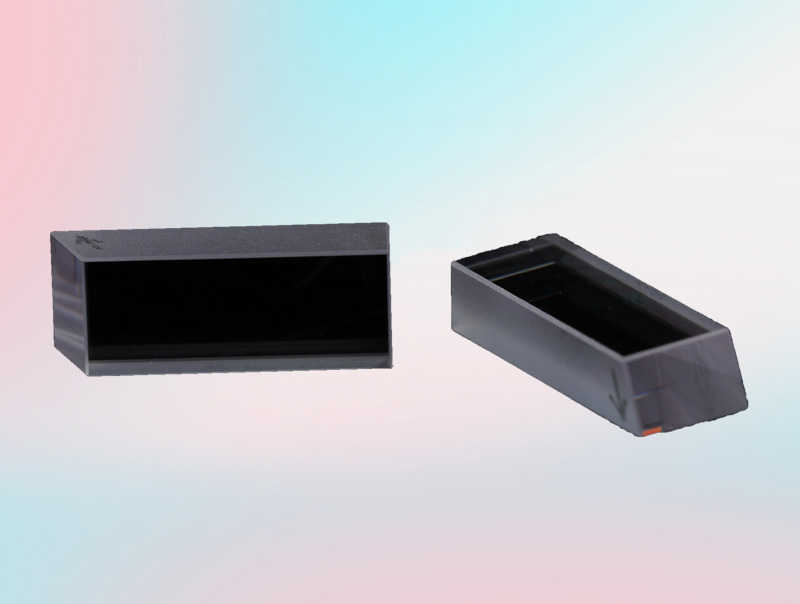
How Birefringent Crystals Impact the Performance of Light-Based Technologies
outline: How Birefringent Crystals Impact the Performance of Light-Based Technologies Introduction to Birefringent Crystals Birefringent crystals, defined by their unique optical properties, exhibit a phenomenon wherein light is refracted into two distinct rays when passing through them. This property arises from the anisotropic nature of the crystal structure, which leads to different light velocities
2026-01-31