
How Birefringent Crystals Impact the Performance of Light-Based Technologies
Release Time:
2026-01-31
outline: How Birefringent Crystals Impact the Performance of Light-Based Technologies Introduction to Birefringent Crystals Birefringent crystals, defined by their unique optical properties, exhibit a phenomenon wherein light is refracted into two distinct rays when passing through them. This property arises from the anisotropic nature of the crystal structure, which leads to different light velocities
How Birefringent Crystals Impact the Performance of Light-Based Technologies
Introduction to Birefringent Crystals
Birefringent crystals, defined by their unique optical properties, exhibit a phenomenon wherein light is refracted into two distinct rays when passing through them. This property arises from the anisotropic nature of the crystal structure, which leads to different light velocities along different crystallographic axes. Understanding how birefringent crystals interact with light is pivotal for enhancing the efficiency and functionality of various light-based technologies, from telecommunications to advanced imaging systems.
The Science Behind Birefringence
What Is Birefringence?
Birefringence, or double refraction, occurs when light waves enter a material and split into two rays, each traveling at different velocities. This phenomenon is predominantly observed in materials with a non-uniform structure, such as calcite and quartz. The degree of birefringence varies with the material and its crystalline arrangement, significantly influencing optical performance.
Types of Birefringent Crystals
There are several types of birefringent crystals, including:
- **Uniaxial Crystals**: These crystals have one optical axis, resulting in two refractive indices. Examples include sapphire and calcite.
- **Biaxial Crystals**: These possess two optical axes, yielding three refractive indices. Examples include tourmaline and mica.
Understanding these variations is essential for selecting the right crystal for specific applications in light-based technologies.
The Role of Birefringent Crystals in Optical Applications
Enhancing Imaging Systems
Birefringent crystals significantly enhance imaging systems, such as microscopes and cameras, by improving contrast and resolution. The ability to manipulate the polarization of light enables better differentiation of materials and structures within an image. This capability is particularly useful in biological imaging, where cellular structures can be observed with enhanced clarity.
Telecommunications and Fiber Optic Technology
In the realm of telecommunications, birefringent crystals are crucial in fiber optic technology. They facilitate the polarization management of light signals, which is vital for maximizing data transmission rates. By utilizing birefringent materials in waveguides and modulators, engineers can reduce signal loss and enhance overall communication efficiency.
Applications of Birefringent Crystals in Light-Based Technologies
Liquid Crystal Displays (LCDs)
Birefringent crystals play a fundamental role in Liquid Crystal Displays (LCDs). By controlling the polarization of light, these crystals enable the display of images with high resolution and vivid colors. The manipulation of light via birefringent materials allows for the creation of versatile displays used in smartphones, televisions, and monitors.
Optical Sensors
Optical sensors utilize birefringent crystals to detect changes in light properties, making them essential in various measurement applications. These sensors are capable of assessing temperature, pressure, and strain, providing valuable data in industrial and environmental monitoring systems. The high sensitivity of birefringent materials to external changes enhances the accuracy of these sensors.
Photography and Cinematography
In photography and cinematography, birefringent crystals are employed in filters and optical devices to manipulate light. Circular polarizers, for example, utilize birefringent materials to reduce glare and enhance color saturation, resulting in improved image quality. This application is particularly relevant in outdoor photography where reflections can diminish visual appeal.
Challenges and Limitations of Birefringent Crystals
While birefringent crystals offer numerous advantages, several challenges exist in their application.
Temperature Sensitivity
Birefringent materials can exhibit temperature sensitivity, leading to variations in their optical properties. This characteristic may result in reduced performance under fluctuating environmental conditions, necessitating careful temperature management in critical applications.
Manufacturing Challenges
The production of high-quality birefringent crystals can be complex and costly. Achieving the desired purity and crystalline structure is essential for optimal performance, which often requires specialized manufacturing techniques. These challenges may limit the availability of certain birefringent materials for widespread use.
Future Trends in Birefringent Crystal Applications
The ongoing research and development in the field of birefringent crystals are likely to yield exciting advancements.
Integration with Nanotechnology
The integration of birefringent materials with nanotechnology holds immense promise for creating smaller, more efficient optical devices. Researchers are exploring ways to manipulate light at the nanoscale, potentially leading to breakthroughs in areas such as photonics and quantum computing.
Enhanced Data Transmission Techniques
As data transmission demands continue to rise, the development of advanced birefringent materials for fiber optics is crucial. Innovations in this field may lead to higher bandwidth capabilities and improved signal integrity, ultimately enhancing communication systems.
Frequently Asked Questions (FAQs)
What are the primary uses of birefringent crystals?
Birefringent crystals are primarily used in optical devices, imaging systems, telecommunications, and various sensors. They enhance image quality and improve data transmission efficiency.
How do birefringent crystals affect light polarization?
Birefringent crystals can manipulate the polarization of light, allowing for the control of how light travels through optical systems. This property is essential for applications such as LCDs and polarizers.
Can birefringent crystals be used in everyday technology?
Yes, birefringent crystals are present in many everyday technologies, including smartphones, televisions, cameras, and optical sensors.
What challenges do birefringent crystals face in manufacturing?
The primary challenges in manufacturing birefringent crystals include achieving high purity and the desired crystalline structure, which can be complex and costly.
Are there any advancements in birefringent crystal technology?
Current advancements focus on integrating birefringent materials with nanotechnology and enhancing data transmission techniques to improve optical device performance.
Conclusion
Birefringent crystals are integral to the advancement of light-based technologies, providing critical enhancements in imaging, telecommunications, and optical sensing. As we continue to explore the unique properties and applications of these materials, their role in driving innovation across various industries will only grow. Understanding their impact not only highlights their importance but also paves the way for future developments that could revolutionize how we harness light for technology.

The Intricacies and Applications of Polarized Optical Components in Photonics
outline: Polarized optical components play a pivotal role in the field of photonics, enabling the control and manipulation of light in various applications. These components are designed to filter, reflect, and transmit light waves based on their polarization state, enhancing the performance of optical systems. The primary function of polarized optical components is to separate light waves into distinct po
2026-02-02

Polarizing Optics Drive New Advances in Precision Imaging and Photonics
outline: Polarizing optics control light polarization to reduce glare, enhance contrast, and enable precise analysis in optical and photonic systems
2026-02-02
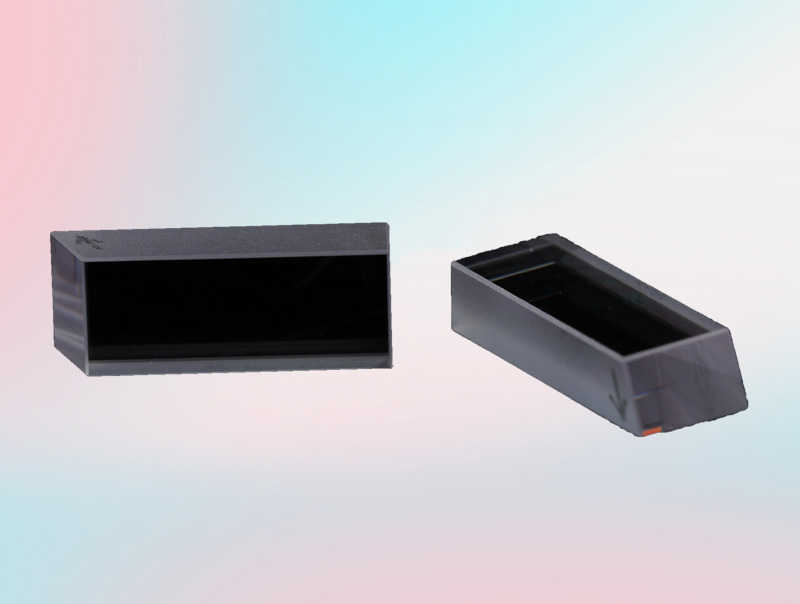
How Birefringent Crystals Impact the Performance of Light-Based Technologies
outline: How Birefringent Crystals Impact the Performance of Light-Based Technologies Introduction to Birefringent Crystals Birefringent crystals, defined by their unique optical properties, exhibit a phenomenon wherein light is refracted into two distinct rays when passing through them. This property arises from the anisotropic nature of the crystal structure, which leads to different light velocities
2026-01-31