
Birefringent Crystals: Essential Elements for Future Photonic Technologies
Release Time:
2026-05-03
outline: Birefringent Crystals: Key Components in Advanced Photonic Systems Table of Contents 1. Introduction to Birefringent Crystals 2. Understanding Birefringence 3. Types of Birefringent Crystals 4. Optical Properties of Birefringent Crystals 5. Applications in Advanced Photonic Systems 6. Manufacturing Processes of Birefringent Crystals 7. Advantages and Limitations of Bir
Birefringent Crystals: Key Components in Advanced Photonic Systems
Table of Contents
- 1. Introduction to Birefringent Crystals
- 2. Understanding Birefringence
- 3. Types of Birefringent Crystals
- 4. Optical Properties of Birefringent Crystals
- 5. Applications in Advanced Photonic Systems
- 6. Manufacturing Processes of Birefringent Crystals
- 7. Advantages and Limitations of Birefringent Crystals
- 8. Future Trends in Birefringent Crystal Technology
- 9. Frequently Asked Questions
- 10. Conclusion
1. Introduction to Birefringent Crystals
Birefringent crystals are fascinating materials that possess unique optical properties, making them critical components in advanced photonic systems. Unlike isotropic materials, which have uniform properties in all directions, birefringent crystals exhibit different refractive indices based on the polarization and propagation direction of light. This characteristic enables a wide range of applications, including optical devices, sensors, and communication systems.
2. Understanding Birefringence
Birefringence, also known as double refraction, occurs when a light wave passes through a birefringent material and splits into two beams. These beams travel at different velocities and follow distinct paths. This phenomenon arises from the anisotropic nature of the crystal structure, where the symmetry and arrangement of atoms lead to varying refractive indices.
The Mechanism of Birefringence
When light enters a birefringent crystal, it interacts with the crystal lattice. Depending on the crystallographic orientation, the light beam can be categorized into two types:
- **Ordinary Ray (o-ray)**: Travels at a constant speed determined by the average refractive index.
- **Extraordinary Ray (e-ray)**: Experiences variable speeds depending on the angle of incidence, leading to the unique behavior of this ray.
Significance of Birefringence
The significance of birefringence lies not only in its intrinsic optical characteristics but also in the myriad applications it supports, including:
- **Polarization control** in optical systems.
- **Optical phase shifting** in interferometry.
- **Stress analysis** in engineering materials.
3. Types of Birefringent Crystals
Different birefringent crystals are classified based on their composition and structure. The following are some of the most commonly used types in photonic applications:
1. Calcite (Calcium Carbonate)
Calcite is one of the most well-known birefringent crystals. It is highly transparent and is used in polarized light applications, such as polarizers and beam splitters.
2. Quartz (Silicon Dioxide)
Quartz is widely used in various optical devices due to its stability and optical clarity. It is commonly utilized in wave plates and optical modulators.
3. Lithium Niobate (LiNbO3)
Lithium niobate is a powerful nonlinear optical crystal. It is extensively used in telecommunications for devices such as frequency converters and optical switches.
4. Potassium Titanyl Phosphate (KTP)
KTP is celebrated for its efficient nonlinear optical properties. It is often used in frequency doubling and parametric oscillation applications.
5. Barium Titanate (BaTiO3)
Barium titanate exhibits high birefringence and is applied in photonic devices for its electro-optic properties, making it suitable for modulators.
4. Optical Properties of Birefringent Crystals
The optical properties of birefringent crystals are crucial in determining their functionality in photonic applications. Key properties include:
1. Refractive Indices
The refractive indices for o-rays and e-rays are critical for understanding how light interacts with birefringent materials. The difference in these indices allows for the manipulation of light paths, facilitating various optical functions.
2. Polarization Rotation
Birefringent crystals can rotate the polarization of light, making them invaluable in devices like polarizers, optical isolators, and optical filters. This property is exploited in many photonic applications to enhance performance.
3. Anisotropy
The anisotropic nature of birefringent crystals means that their optical characteristics change depending on the direction of light propagation. This attribute is essential for applications requiring precise optical control.
5. Applications in Advanced Photonic Systems
Birefringent crystals play a vital role in various domains of photonics, enhancing the efficiency and effectiveness of numerous devices.
1. Polarization Devices
Birefringent crystals are integral to devices that manipulate polarization, such as polarizers and wave plates. These components are crucial in many optical systems, including cameras, lasers, and microscopes.
2. Optical Communication
In optical fibers and communication systems, birefringent crystals are used in modulators and filters, enhancing signal quality and reducing noise in data transmission.
3. Nonlinear Optics
Birefringent crystals like KTP and LiNbO3 are extensively used in nonlinear optical applications, including frequency doubling, where they convert one wavelength of light into another, enabling advanced laser technology.
4. Imaging Systems
In imaging technologies, birefringent crystals contribute to enhanced resolution and contrast, making them valuable in medical imaging and industrial inspection systems.
5. Sensors and Measurement Devices
Birefringent crystals are utilized in sensors that measure stress, temperature, and pressure. Their sensitivity to optical changes allows for high-precision measurement applications.
6. Manufacturing Processes of Birefringent Crystals
The production of birefringent crystals involves several key processes to ensure quality and performance in photonic applications.
1. Crystal Growth Techniques
Various techniques are employed for crystal growth, including the Czochralski method, hydrothermal synthesis, and Bridgman technique. Each method has its advantages, depending on the desired crystal properties.
2. Quality Control
Rigorous quality control measures are essential in the manufacturing of birefringent crystals. Techniques such as X-ray diffraction and optical characterization are employed to ensure the crystals meet the required specifications.
3. Surface Treatment and Polishing
Surface finishing is crucial for the optical performance of birefringent crystals. Polishing techniques are used to create smooth surfaces that minimize scattering and maximize transmission efficiency.
7. Advantages and Limitations of Birefringent Crystals
Understanding the advantages and limitations of birefringent crystals is essential for selecting the right materials for photonic applications.
1. Advantages
- **High Optical Clarity**: Birefringent crystals offer excellent transparency, making them suitable for high-quality optical applications.
- **Versatile Applications**: Their unique properties enable a broad range of applications in optics and photonics.
- **Durability**: Many birefringent crystals exhibit high resistance to thermal and mechanical stress.
2. Limitations
- **Cost of Production**: The manufacturing processes can be costly, particularly for high-quality crystals.
- **Sensitivity to Temperature**: Birefringent crystals can be sensitive to temperature variations, which may affect their optical properties.
- **Limited Availability**: Some specialized birefringent crystals may not be readily available, limiting their use in certain applications.
8. Future Trends in Birefringent Crystal Technology
The future of birefringent crystal technology is promising, with ongoing research and development focused on enhancing their properties and expanding their applications.
1. Integration with Nanotechnology
The integration of birefringent crystals with nanotechnology can lead to innovative photonic devices with enhanced functionalities, such as nanoscale sensors and advanced imaging systems.
2. Development of Hybrid Materials
Research is underway to develop hybrid materials that combine the unique properties of birefringent crystals with other materials, leading to new functionalities in photonic applications.
3. Green Manufacturing Practices
As sustainability becomes increasingly important, the development of eco-friendly manufacturing processes for birefringent crystals is expected to gain traction, minimizing environmental impact.
9. Frequently Asked Questions
1. What are birefringent crystals used for?
Birefringent crystals are used in various applications, including optical devices, sensors, imaging systems, and telecommunications. Their unique optical properties allow for manipulation and control of light.
2. How do birefringent crystals work?
Birefringent crystals work by splitting incoming light into two rays with different velocities and refractive indices based on the polarization state and direction of propagation.
3. Are all crystals birefringent?
No, not all crystals are birefringent. Only anisotropic crystals exhibit birefringence, while isotropic crystals have uniform optical properties in all directions.
4. Can birefringent crystals be used in lasers?
Yes, birefringent crystals can be used in laser systems, particularly in frequency doubling and polarization management applications.
5. What are the challenges in using birefringent crystals?
Challenges include high production costs, temperature sensitivity, and limited availability of certain specialized crystals.
10. Conclusion
Birefringent crystals are integral components in the realm of advanced photonic systems. Their unique optical properties enable a plethora of applications across various industries, from telecommunications to imaging technology. As research and development continue to push the boundaries of what these materials can achieve, we can anticipate even more innovative applications and solutions that leverage the unique characteristics of birefringent crystals. Understanding their role and potential is crucial for the advancement of modern optical technologies, ensuring that we remain at the forefront of the photonics revolution.
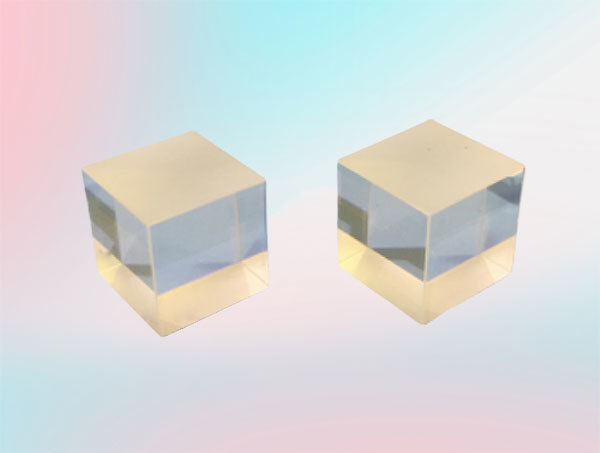
The Evolution of Polarizing Optics in the Era of Smart Devices
outline: The Evolution of Polarizing Optics in the Era of Smart Devices In recent years, the rapid evolution of technology has transformed our daily lives in unimaginable ways. Among these advancements, polarizing optics have made significant strides, particularly in the realm of smart devices. This article provides an in-depth exploration of how polarizing optics have evolved, their applications in modern
2026-06-14
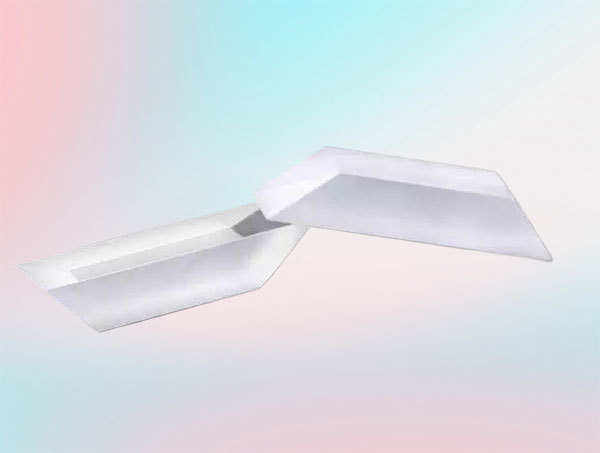
The Fascinating World of Optical Prisms: Understanding Their Roles and Applications
outline: Optical prisms are critical components in the field of photonics, playing a vital role in manipulating light in various applications. These transparent optical elements have flat, polished surfaces that refract light, enabling them to alter its direction and properties. The fundamental principle behind optical prisms is the refraction of light, which occurs when light passes from one medium to ano
2026-06-11
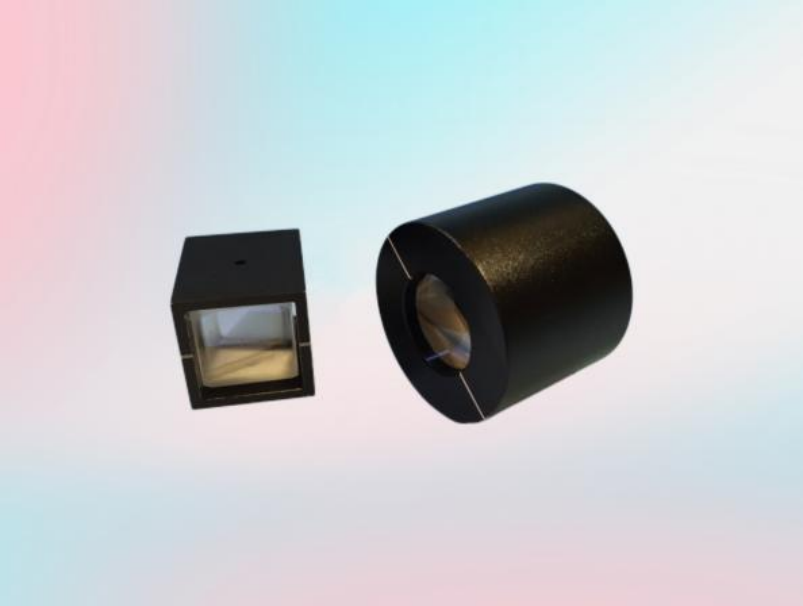
Discovering the Versatility of Crystal Polarizers in Various Industries
outline: Discovering the Versatility of Crystal Polarizers in Various Industries Table of Contents 1. Introduction to Crystal Polarizers 2. What Are Crystal Polarizers? 3. Types of Crystal Polarizers 3.1 Linear Polarizers 3.2 Circular Polarizers 4. Applications of Crystal Polarizers in Various Industries 4.1 Telecommunications
2026-06-08