
Breaking Down the Types of Polarized Optical Components and Their Uses
Release Time:
2026-05-21
outline: Breaking Down the Types of Polarized Optical Components and Their Uses Table of Contents 1. Introduction to Polarized Optical Components 2. What is Polarization? 3. Types of Polarized Optical Components 3.1 Polarizers 3.2 Beam Splitters 3.3 Optical Isolators 3.4 Liquid Crystal Displays (LCDs) 3.5 Polarizing Filters 4. Applications of Polarized Optical Components 4.1 Telecommu
Breaking Down the Types of Polarized Optical Components and Their Uses
Table of Contents
1. Introduction to Polarized Optical Components
2. What is Polarization?
3. Types of Polarized Optical Components
3.1 Polarizers
3.2 Beam Splitters
3.3 Optical Isolators
3.4 Liquid Crystal Displays (LCDs)
3.5 Polarizing Filters
4. Applications of Polarized Optical Components
4.1 Telecommunications
4.2 Imaging Systems
4.3 Scientific Research
4.4 Consumer Electronics
5. How Polarized Optical Components Enhance Performance
6. Selecting the Right Polarized Optical Component
7. Future Trends in Polarized Optical Components
8. FAQs about Polarized Optical Components
9. Conclusion
1. Introduction to Polarized Optical Components
Polarized optical components are integral to many modern technologies, enabling a wide range of applications from telecommunications to imaging systems. These components manipulate light to optimize performance and enhance image quality, making them invaluable in various industries. In this article, we will explore the different types of polarized optical components, their mechanisms, applications, and how they contribute to advancements in technology.
2. What is Polarization?
Polarization refers to the orientation of light waves as they propagate through space. Light, which travels in waves, can oscillate in various directions. When light becomes polarized, it oscillates predominantly in one direction. This characteristic is crucial in numerous optical applications, as it allows for improved contrast and clarity in images, minimizes glare, and enhances signal strength in communication systems.
3. Types of Polarized Optical Components
The world of polarized optics comprises several key components, each serving a unique purpose. Understanding these components is essential for selecting the appropriate tools for specific applications.
3.1 Polarizers
**Polarizers** are devices that allow light waves of a specific polarization to pass through while blocking others. They are commonly used in photography to reduce reflections and enhance color saturation. Polarizers can be categorized into two types: linear and circular. Linear polarizers block light waves oscillating in a direction perpendicular to their orientation, while circular polarizers add a quarter-wave plate to convert linearly polarized light into circularly polarized light.
3.2 Beam Splitters
**Beam splitters** are optical devices that split a beam of light into two or more separate beams. They are used in various applications, including laser systems, where they direct light paths for interference and coherence control. Polarizing beam splitters utilize polarization to separate light into its perpendicular and parallel components, effectively enhancing the efficiency of optical setups.
3.3 Optical Isolators
**Optical isolators**, also known as optical diodes, allow light to pass in one direction while preventing back reflections. This property is vital in laser systems, where back reflections can cause noise and instability. By incorporating polarized optics, these devices ensure that only forward-propagating light is transmitted, protecting sensitive components from disruptive feedback.
3.4 Liquid Crystal Displays (LCDs)
**Liquid Crystal Displays (LCDs)** utilize polarized light to create images. By placing a layer of liquid crystals between two polarizing filters, LCDs can control the amount of light transmitted through the screen. This technology is prevalent in televisions, computer monitors, and smartphones. The combination of polarization and liquid crystals allows for vibrant color reproduction and sharp image clarity.
3.5 Polarizing Filters
**Polarizing filters** are commonly used in photography and cinematography to reduce unwanted reflections and enhance image color. By eliminating glare from reflective surfaces, these filters improve overall image quality and contrast. Photographers often attach polarizing filters to their lenses to achieve richer colors and greater detail in their images.
4. Applications of Polarized Optical Components
The diverse functionalities of polarized optical components make them applicable across various fields. Understanding these applications highlights their significance in advancing technology and improving user experiences.
4.1 Telecommunications
In telecommunications, polarized optical components enhance signal transmission and reception. Optical fiber systems utilize polarization to increase bandwidth and reduce crosstalk. As data transmission demands grow, the use of polarized optics in communication networks is becoming increasingly critical.
4.2 Imaging Systems
Polarized optical components improve imaging systems in both scientific and consumer applications. In microscopy, polarizers enhance contrast and detail in samples, enabling scientists to observe structures that would otherwise be invisible. Similarly, in consumer electronics, polarized filters enhance the viewing experience in displays by improving brightness and color fidelity.
4.3 Scientific Research
Researchers utilize polarized optical components in various scientific fields, including physics, biology, and materials science. By manipulating polarized light, scientists can study the properties of materials, analyze biological specimens, and conduct experiments that require precise control of light.
4.4 Consumer Electronics
The impact of polarized optical components extends to consumer electronics, where devices such as smartphones, tablets, and televisions leverage these components for improved display quality. The integration of polarized optics contributes to clearer visuals, reduced glare, and enhanced color reproduction, significantly enhancing user experiences.
5. How Polarized Optical Components Enhance Performance
Polarized optical components play a crucial role in enhancing the performance of various systems. By manipulating light properties, these components help to achieve better image quality, reduce glare, and increase transmission efficiency. In telecommunications, for instance, the use of polarized optics can minimize signal loss and enhance data integrity. In photography, they allow for richer colors and clearer images by reducing unwanted reflections. Overall, the inclusion of polarized optical components is vital for optimizing performance across numerous applications.
6. Selecting the Right Polarized Optical Component
Choosing the right polarized optical component for a specific application requires a thorough understanding of the requirements and conditions. Factors to consider include the wavelength of light, the level of polarization needed, and the intended use of the component. For instance, in high-precision applications such as laser optics, selecting a high-quality polarizer with minimal transmission losses is essential. Furthermore, it is crucial to ensure compatibility with existing systems to maximize performance.
7. Future Trends in Polarized Optical Components
The future of polarized optical components is promising, with ongoing advancements in materials and manufacturing techniques. Emerging technologies, such as augmented reality and virtual reality, are driving the demand for high-performance optical components. Researchers are exploring new materials that offer better polarization properties while reducing size and weight. As industries continue to evolve, polarized optical components will play an increasingly vital role in shaping the future of optics.
8. FAQs about Polarized Optical Components
**Q1: What is the difference between linear and circular polarizers?**
A1: Linear polarizers allow light waves oscillating in one direction to pass through while blocking waves in a perpendicular direction. Circular polarizers, on the other hand, convert linearly polarized light into circularly polarized light, which is beneficial for certain applications like 3D imaging.
**Q2: How do optical isolators work?**
A2: Optical isolators use polarized light and a Faraday rotator to ensure that light can only travel in one direction. They prevent back reflections from destabilizing laser systems.
**Q3: Can polarized optical components be used in everyday photography?**
A3: Yes, photographers commonly use polarizing filters to reduce glare and enhance colors in their images, especially when shooting landscapes or reflective surfaces.
**Q4: Why are polarized optical components important in telecommunications?**
A4: In telecommunications, polarized optical components improve signal integrity and transmission efficiency, allowing for higher bandwidth and reduced crosstalk in optical fiber systems.
**Q5: What new technologies are emerging in the field of polarized optics?**
A5: Emerging technologies include the development of advanced materials for better polarization properties and applications in augmented and virtual reality, which require high-performance optical components.
9. Conclusion
Polarized optical components are essential tools that enhance various technologies, from telecommunications to imaging systems. By understanding the different types of components, their applications, and the advantages they offer, we can appreciate their pivotal role in modern optics. As the industry continues to evolve, the demand for high-performance polarized optical components will only grow. Embracing these advancements will lead to improved technologies and user experiences across multiple sectors, solidifying the importance of polarized optics in our daily lives.
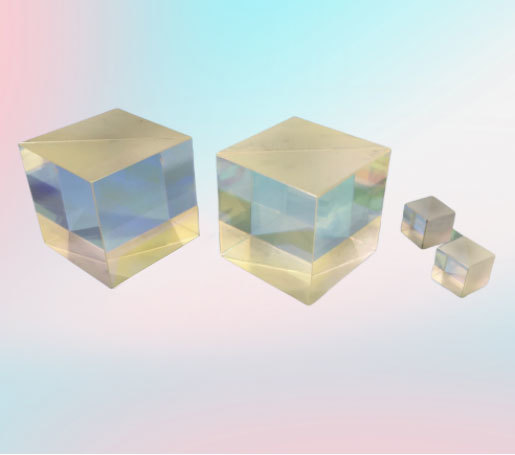
Breaking Down the Types of Polarized Optical Components and Their Uses
outline: Breaking Down the Types of Polarized Optical Components and Their Uses Table of Contents 1. Introduction to Polarized Optical Components 2. What is Polarization? 3. Types of Polarized Optical Components 3.1 Polarizers 3.2 Beam Splitters 3.3 Optical Isolators 3.4 Liquid Crystal Displays (LCDs) 3.5 Polarizing Filters 4. Applications of Polarized Optical Components 4.1 Telecommu
2026-05-21
Understanding Birefringent Crystals: Key Insights for Optoelectronic Applications
outline: Birefringent crystals are materials characterized by their unique optical properties, specifically their ability to refract light differently depending on the polarization and direction of the light wave. This phenomenon occurs due to the anisotropic nature of the crystal structure, leading to two distinct refractive indices: one for the electric field oriented parallel to the optical axis and ano
2026-05-18
What Every Engineer Should Know About Polarizing Optics
outline: What Every Engineer Should Know About Polarizing Optics Table of Contents Introduction to Polarizing Optics Fundamentals of Polarization Types of Polarizers Linear Polarizers Circular Polarizers Neutral Density Polarizers Applications of Polarizing Optics Scientific Research Industrial Appl
2026-05-15