
How Optical Prisms Are Used in Holography: A Comprehensive Guide
Release Time:
2026-06-26
outline: How Optical Prisms Are Used in Holography Table of Contents 1. Introduction to Holography 2. What Are Optical Prisms? 3. The Science of Light and Prisms 4. The Role of Optical Prisms in Holography 5. Types of Optical Prisms Used in Holography 6. Applications of Optical Prisms in Holography 7. Advantages of Using Optical Prisms in Holography 8. The Future of Hologra
How Optical Prisms Are Used in Holography
Table of Contents
- 1. Introduction to Holography
- 2. What Are Optical Prisms?
- 3. The Science of Light and Prisms
- 4. The Role of Optical Prisms in Holography
- 5. Types of Optical Prisms Used in Holography
- 6. Applications of Optical Prisms in Holography
- 7. Advantages of Using Optical Prisms in Holography
- 8. The Future of Holography and Optical Prisms
- 9. FAQs about Optical Prisms and Holography
- 10. Conclusion
1. Introduction to Holography
Holography is a revolutionary technique that allows for the recording and reconstruction of light fields, creating three-dimensional images that can be viewed without the need for special glasses. This innovative technology has applications across various fields, from art and entertainment to telecommunications and data storage. Understanding how optical prisms contribute to holography is essential for anyone interested in the science of light and imaging.
2. What Are Optical Prisms?
Optical prisms are transparent devices made from glass or other optical materials that refract, reflect, and disperse light. They manipulate light paths to achieve desired effects, such as altering the direction of light beams or separating light into its component colors. The geometry and material properties of prisms play a crucial role in their functionality.
How Prisms Work
When light passes through a prism, it slows down and bends due to the change in medium, a phenomenon known as refraction. The degree to which light bends depends on the wavelength of the light, which is why prisms can separate white light into a spectrum of colors. This principle is not only fundamental in optics but also vital in various applications, including holography.
3. The Science of Light and Prisms
Understanding the science behind light and prisms provides valuable insight into their use in holography. Light behaves as both a particle and a wave, and its wave properties are essential for creating holograms. When light waves interact with objects, they create interference patterns. These patterns can be captured and reconstructed to form holograms.
Refraction and Reflection
Prisms utilize both refraction and reflection to manipulate light. The angles and surfaces of the prism determine how light is redirected. In holography, this manipulation is crucial for achieving the desired image quality and depth perception in holograms.
4. The Role of Optical Prisms in Holography
Optical prisms play a pivotal role in the holographic process. They help in directing laser beams, splitting light into different paths, and ensuring that the recording medium receives the correct light interference patterns.
Creating Holographic Images
To create a hologram, a laser beam is split into two paths: the object beam and the reference beam. The object beam illuminates the subject, while the reference beam directly hits the recording surface. Optical prisms assist in directing these beams accurately, allowing for precise interference patterns that result in high-quality holograms.
5. Types of Optical Prisms Used in Holography
Different types of optical prisms are utilized in holography, each serving specific purposes. Understanding these types can enhance our appreciation of how holographic images are created.
Triangular Prisms
Triangular prisms are the most common type used in holography. Their simple shape allows for effective light bending and is essential in directing beams to achieve the desired interference patterns.
Wedge Prisms
Wedge prisms are used to create optical path differences between the object and reference beams. This is crucial for recording precise holographic images.
Corner Cube Reflectors
Corner cube reflectors are employed to reflect light back along its incoming path. They are particularly useful in certain holographic applications where high precision is required.
6. Applications of Optical Prisms in Holography
The applications of optical prisms in holography are diverse and impactful. From medical imaging to data storage, the potential uses are vast.
Medical Imaging
In the medical field, holography is used for imaging tissues and organs. Optical prisms help in creating detailed 3D representations of internal structures, enhancing diagnostic capabilities.
Data Storage
Holographic data storage is an emerging technology that promises high-capacity storage solutions. Optical prisms facilitate the recording and retrieval of data through holograms, offering a substantial advantage over traditional methods.
Art and Entertainment
In the realm of art and entertainment, holography creates captivating visual experiences. Optical prisms enhance the clarity and depth of holographic displays, making them more engaging for audiences.
7. Advantages of Using Optical Prisms in Holography
Utilizing optical prisms in holography offers several advantages that enhance the overall quality and effectiveness of holographic imaging.
Improved Image Quality
The precision of optical prisms improves the quality of holographic images, enabling more accurate representations of objects. This is particularly important in applications such as medical imaging, where clarity is paramount.
Enhanced Depth Perception
Optical prisms contribute to better depth perception in holograms, allowing viewers to experience a more immersive and realistic representation of the subject matter.
Versatility
The versatility of optical prisms makes them suitable for a wide range of holographic applications, from scientific research to commercial use, further broadening the scope of holography.
8. The Future of Holography and Optical Prisms
The future of holography looks promising, with ongoing research and advancements in optical technology. As new materials and techniques are developed, the capabilities of optical prisms in holography will continue to expand.
Innovations in Optical Materials
Emerging materials, such as metamaterials and nanostructured optics, could revolutionize how optical prisms are designed and utilized in holography. These innovations may lead to enhanced performance and new applications.
Integration with Other Technologies
Integrating optical prisms with other optical technologies, such as augmented reality and virtual reality, may create groundbreaking applications in entertainment, education, and beyond.
9. FAQs about Optical Prisms and Holography
1. What is the primary function of optical prisms in holography?
Optical prisms are used to manipulate light paths, directing and splitting laser beams to create precise interference patterns necessary for holographic imaging.
2. Can holography be achieved without optical prisms?
While it's possible to create holograms without prisms, their use greatly enhances the accuracy and quality of the resulting images.
3. What types of materials are used to make optical prisms?
Optical prisms are typically made from glass, acrylic, or specialized optical materials that offer the necessary refractive properties.
4. How do optical prisms improve depth perception in holography?
By directing light accurately and creating precise interference patterns, optical prisms enhance the three-dimensionality of holographic images, improving depth perception for viewers.
5. What are some future trends in holography and optical prisms?
Future trends include the development of new optical materials and integration with technologies like augmented reality, which could expand the applications of holography significantly.
10. Conclusion
Optical prisms are indispensable tools in the field of holography, facilitating the creation of stunning three-dimensional images through their manipulation of light. With applications that span medical imaging, data storage, and artistic expression, their importance cannot be overstated. As technology advances, the potential for optical prisms in holography will continue to expand, paving the way for innovations that could change how we interact with visual information. Understanding the science and applications of optical prisms will enhance appreciation for this remarkable technology and its future possibilities.
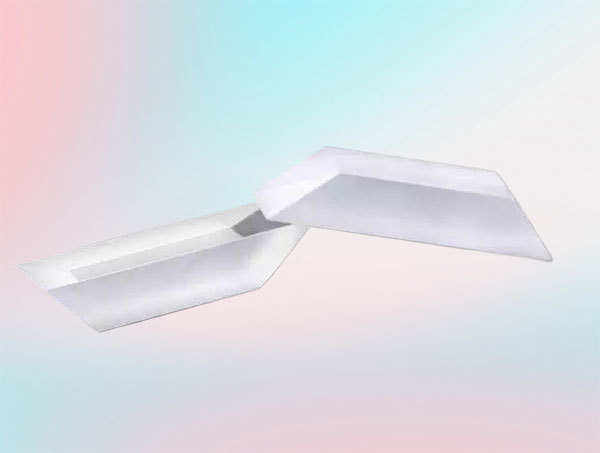
How Optical Prisms Are Used in Holography: A Comprehensive Guide
outline: How Optical Prisms Are Used in Holography Table of Contents 1. Introduction to Holography 2. What Are Optical Prisms? 3. The Science of Light and Prisms 4. The Role of Optical Prisms in Holography 5. Types of Optical Prisms Used in Holography 6. Applications of Optical Prisms in Holography 7. Advantages of Using Optical Prisms in Holography 8. The Future of Hologra
2026-06-26
Understanding Crystal Polarizers: Essential Components in Optoelectronic Devices
outline: Crystal polarizers are vital components in the field of optoelectronics, renowned for their ability to manipulate light for various applications. These devices exploit the unique properties of crystals to selectively allow light waves of a specific polarization to pass through while blocking others. This property is particularly useful in numerous high-tech applications, including imaging systems,
2026-06-23
How Polarized Optical Components Can Revolutionize Imaging Systems
outline: How Polarized Optical Components Can Revolutionize Imaging Systems Introduction to Polarized Optical Components In the realm of optical technologies, **polarized optical components** are significant game-changers. These specialized devices play a crucial role in **enhancing image quality** and **improving system performance** across various imaging applications. From medical diagnostics to remot
2026-06-20
