
The Intriguing World of Polarized Optical Components: Enhancing Photonic Applications
Release Time:
2026-10-03
outline: Polarized optical components play a crucial role in the field of optoelectronics, where the manipulation of light is essential for numerous applications. These components are specifically designed to filter or manipulate light waves based on their polarization states. Light can be described as a wave that oscillates in various directions, and when it is polarized, it oscillates predominantly in a
One of the most common applications of polarized optical components is in the realm of imaging systems. For instance, cameras that utilize polarizing filters can significantly reduce glare from reflective surfaces, enhancing image clarity and contrast. This principle is particularly valuable in photography and scientific imaging, where the accuracy of visual data is paramount. Furthermore, in optical communications, polarized components help improve signal integrity by reducing interference, allowing for clearer transmission of data.
In addition to imaging applications, polarized optical components are essential in laser systems. Lasers emit light that is often unpolarized or partially polarized. By incorporating polarizers into these systems, professionals can achieve higher levels of control over the laser's properties, including its intensity and directionality. This aspect is vital in applications ranging from industrial cutting and welding to medical procedures, where precision is key.
The manufacturing of polarized optical components involves sophisticated techniques to ensure that they meet the rigorous standards required for advanced applications. These components can include polarizers, wave plates, and beam splitters, each designed with specific materials and geometries to achieve desired polarization effects. Advances in material science have led to the development of new polymers and coatings that enhance the performance of these components, making them more efficient and durable.
Moreover, the emergence of smart technologies and the Internet of Things (IoT) has opened new avenues for the application of polarized optical components. As devices become more interconnected, the need for effective light management solutions grows. This trend is expected to drive further innovations in the design and application of polarized components, making them indispensable in future optoelectronic systems.
In conclusion, polarized optical components are vital for various applications in the optoelectronics industry. Their ability to manipulate and control light based on polarization makes them essential for imaging, laser technology, and emerging smart applications. As technology continues to advance, the importance of these components will only increase, making them a focal point for professionals in the field.

Birefringent Crystals in Action: Real-World Applications and Benefits
outline: Birefringent Crystals in Action: Real-World Applications and Benefits Table of Contents 1. Understanding Birefringent Crystals 2. The Science Behind Birefringence 3. Key Types of Birefringent Crystals 4. Applications of Birefringent Crystals in Optics 5. Birefringent Crystals in Telecommunications 6. Birefringence in Imaging Technologies 7. Future Trends and Innovations in Birefringent Crystals 8.
2026-11-15
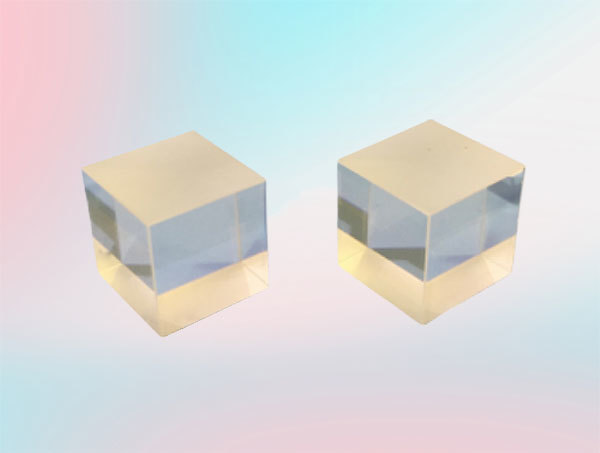
The Essential Guide to Polarizing Optics in Photonics
outline: Polarizing optics is a vital aspect of optical technology, influencing various applications in the electronics and photonics industries. At its core, polarizing optics involves the manipulation of light waves, specifically their polarization states. When light is generated, it can oscillate in various directions; polarizing optics allow for the control of these oscillations, leading to clearer ima
2026-11-12

How Optical Prisms Are Revolutionizing Educational Tools
outline: How Optical Prisms Are Revolutionizing Educational Tools Table of Contents Introduction to Optical Prisms and Education Understanding Optical Prisms: A Brief Overview Applications of Optical Prisms in Educational Tools Enhancing Science Education Applications in Mathematics and Geometry Fostering Creativity in Art and Visual Learning
2026-11-09
