
Birefringent Crystals Drive Innovation in Advanced Optics and Photonics Industry
Release Time:
2026-04-26
outline: Birefringent crystals manufacturer offering high precision optical crystals, superior clarity, stable performance, ideal for scientific and photonics applications
In the rapidly evolving fields of optics, photonics, and laser technology, birefringent crystals have become essential materials that enable a wide range of high-precision applications. Known for their unique optical properties, these crystals are capable of splitting a light beam into two rays with different refractive indices. This phenomenon, known as birefringence or double refraction, plays a critical role in modern scientific instruments, laser systems, telecommunications, medical imaging, and advanced research equipment.
Birefringent crystals are naturally occurring or synthetic materials that exhibit anisotropic optical behavior. When light passes through these crystals, it is divided into ordinary and extraordinary rays, each traveling at different speeds and directions. This unique property allows engineers and scientists to manipulate light with high precision, making birefringent crystals indispensable in optical modulation, polarization control, and wavelength tuning applications.
Common types of birefringent crystals include calcite, quartz, rutile, and various engineered synthetic crystals such as lithium niobate and potassium dihydrogen phosphate (KDP). Each material offers distinct optical characteristics, including refractive index differences, transmission ranges, and thermal stability. Calcite, for example, is widely used in polarizing prisms due to its strong birefringence, while quartz is favored for its excellent chemical stability and broad optical transmission range.
One of the most important applications of birefringent crystals is in laser technology. These crystals are used to control the polarization state of laser beams, improve beam quality, and enhance system stability. In laser cavities, birefringent filters help achieve precise wavelength selection, which is crucial for spectroscopy, material processing, and scientific research. Their ability to manipulate light with extreme accuracy makes them vital components in high-performance laser systems.
In the field of telecommunications, birefringent crystals are used in optical communication systems to manage polarization mode dispersion and improve signal integrity. As global data transmission demands continue to grow, the need for efficient and stable optical components has increased significantly. Birefringent materials help ensure high-speed data transfer with minimal signal loss, supporting the development of next-generation fiber optic networks.
Medical imaging and diagnostic equipment also benefit greatly from birefringent crystal technology. In optical coherence tomography (OCT) and polarized light microscopy, these crystals enhance image resolution and contrast, allowing for more accurate tissue analysis and disease detection. Their ability to control light polarization improves imaging clarity, making them valuable tools in ophthalmology, dermatology, and biomedical research.
In addition to scientific and medical applications, birefringent crystals are widely used in industrial and defense sectors. They are integrated into optical sensors, range-finding devices, and targeting systems where precision light control is essential. Their stability under varying environmental conditions makes them suitable for demanding applications in aerospace and military technologies.
The manufacturing of birefringent crystals requires advanced crystal growth techniques such as hydrothermal synthesis, Czochralski pulling, and flux growth methods. These processes ensure high purity, structural integrity, and consistent optical performance. Modern production facilities utilize strict quality control measures, including optical inspection, interferometry testing, and laser performance evaluation, to ensure that each crystal meets precise specifications.
As technology continues to advance, the demand for high-quality birefringent crystals is expected to grow. Emerging fields such as quantum computing, integrated photonics, and ultrafast laser systems are creating new opportunities for crystal-based optical components. Researchers are actively developing engineered crystals with enhanced birefringence properties, improved thermal resistance, and broader wavelength compatibility.
Sustainability and material efficiency are also becoming important considerations in crystal manufacturing. Efforts are being made to optimize production processes, reduce material waste, and develop environmentally friendly synthesis methods. These initiatives align with the broader global trend toward sustainable high-tech manufacturing.
The global market for birefringent crystals is expanding steadily, driven by increasing investments in optical research, telecommunications infrastructure, and advanced manufacturing technologies. Key production regions include North America, Europe, and Asia-Pacific, where strong demand from research institutions and industrial sectors continues to support market growth.
Looking ahead, birefringent crystals will remain a foundational material in the development of next-generation optical systems. Their unique ability to control and manipulate light with precision ensures their continued relevance across multiple high-tech industries. As innovation in photonics accelerates, these crystals will play an even more critical role in shaping the future of optical science and engineering.

A Comprehensive Guide to Selecting the Right Crystal Polarizers
outline: A Comprehensive Guide to Selecting the Right Crystal Polarizers Table of Contents 1. Introduction to Crystal Polarizers 2. Understanding Polarization: What You Need to Know 3. Types of Crystal Polarizers 4. Key Performance Metrics for Crystal Polarizers 5. Applications of Crystal Polarizers 6. Selecting the Right Crystal Polarizer for Your Needs 7. In
2026-09-06
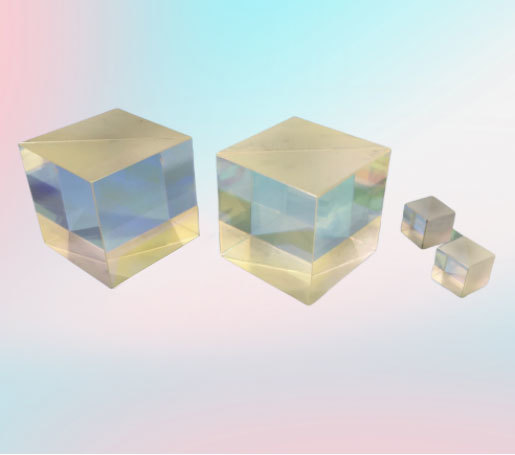
Understanding Polarized Optical Components: Their Role in Modern Optoelectronics
outline: Polarized optical components are essential elements in the field of optoelectronics, playing a pivotal role in manipulating light in ways that enhance the performance and functionality of various optical devices. These components, which include polarizers, beam splitters, and optical filters, are designed to control the orientation and intensity of light waves. By understanding the principles behi
2026-09-03
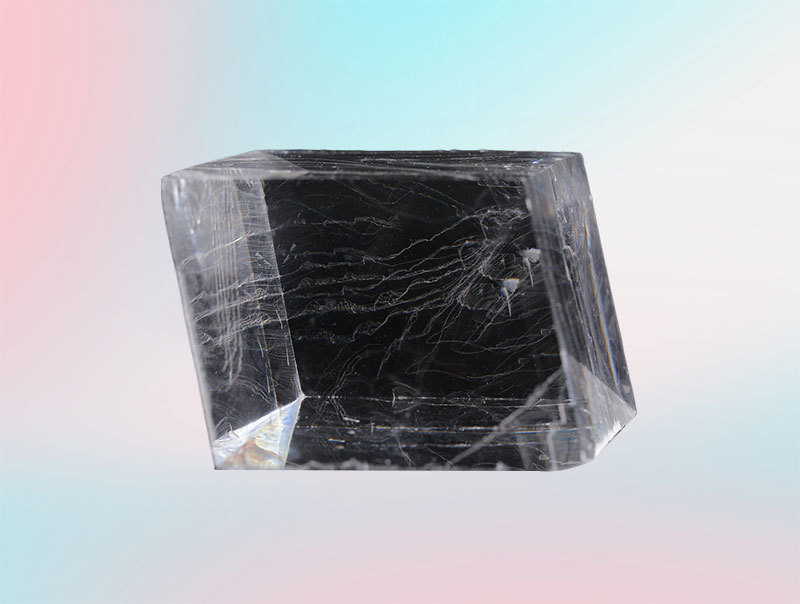
Understanding Birefringent Crystals: A Comprehensive Guide for Electronics Enthusiasts
outline: Understanding Birefringent Crystals: A Comprehensive Guide for Electronics Enthusiasts Table of Contents What Are Birefringent Crystals? Properties of Birefringent Crystals Types of Birefringent Crystals Applications of Birefringent Crystals in Electronics Manufacturing Processes for Birefringent Crystals Future Trends and Innovations in Birefringent Crystals Common Mi
2026-08-31
