
Understanding Crystal Polarizers: From Theory to Practical Use
Release Time:
2025-11-22
outline: Understanding Crystal Polarizers: From Theory to Practical Use Table of Contents 1. Introduction to Crystal Polarizers 2. The Science Behind Polarization 3. Types of Crystal Polarizers 3.1 Unidirectional Polarizers 3.2 Birefringent Polarizers 4. How Crystal Polarizers Work 5. Applications of Crystal Polarizers 5.1
Understanding Crystal Polarizers: From Theory to Practical Use
Table of Contents
- 1. Introduction to Crystal Polarizers
- 2. The Science Behind Polarization
- 3. Types of Crystal Polarizers
- 4. How Crystal Polarizers Work
- 5. Applications of Crystal Polarizers
- 6. Advantages of Crystal Polarizers
- 7. Future Trends in Crystal Polarization Technology
- 8. Frequently Asked Questions
- 9. Conclusion
1. Introduction to Crystal Polarizers
Crystal polarizers are essential optical components that manipulate light waves by filtering specific orientations of light. These components play a critical role in various applications, ranging from photography and displays to advanced imaging systems. Understanding the principles underlying crystal polarizers enables us to appreciate their significance across different industries and technological advancements.
This article will provide an in-depth examination of crystal polarizers, discussing their theoretical foundations, types, operational mechanisms, applications, and future advancements in this field.
2. The Science Behind Polarization
Polarization refers to the orientation of light waves in specific directions. When light travels, it usually vibrates in multiple planes; however, when it encounters certain materials, it can become polarized, vibrating predominantly in a single plane. This phenomenon is crucial in a variety of optical applications.
Polarization can occur through different mechanisms, including reflection, refraction, and scattering. Crystal polarizers exploit these mechanisms, allowing only light waves vibrating in a specific direction to pass through while blocking others. Understanding these principles is fundamental for leveraging crystal polarizers effectively.
3. Types of Crystal Polarizers
Crystal polarizers can be categorized into two primary types: **unidirectional polarizers** and **birefringent polarizers**. Each type serves distinct purposes and employs different operational principles.
3.1 Unidirectional Polarizers
Unidirectional polarizers are designed to transmit light waves that oscillate in a single plane while blocking all other orientations. These polarizers utilize materials that exhibit specific optical properties, ensuring that only the desired light wavelength passes through. They are commonly used in applications such as sunglasses and anti-glare screens, where controlling light direction is essential.
3.2 Birefringent Polarizers
Birefringent polarizers, on the other hand, capitalize on the unique properties of birefringent materials—substances that have different refractive indices based on the polarization and propagation direction of light. These polarizers can separate light into two beams with perpendicular polarization states, enabling more complex optical manipulations. Birefringent polarizers find applications in fields such as telecommunications and advanced imaging technologies.
4. How Crystal Polarizers Work
The operation of crystal polarizers is rooted in the principles of optical anisotropy, where the optical properties vary based on the direction of light propagation. When unpolarized light encounters a crystal polarizer, the following steps occur:
1. **Incident Light**: Unpolarized light, containing waves vibrating in multiple planes, strikes the polarizing material.
2. **Selective Absorption**: Based on the optical characteristics of the polarizer, light waves vibrating in a specific orientation are absorbed, while those aligned with the transmission axis pass through.
3. **Emerging Polarized Light**: The result is polarized light, predominantly vibrating in one plane, which can be utilized in various applications.
Understanding these processes allows engineers and scientists to tailor polarizers for specific uses, enhancing their effectiveness and efficiency.
5. Applications of Crystal Polarizers
Crystal polarizers find a vast array of applications across multiple domains. Below, we explore some of the key sectors where these innovative optical components are employed.
5.1 In the Optical Industry
In the optical industry, crystal polarizers are prominently used in the construction of optical instruments such as microscopes and telescopes. These instruments rely on polarized light to enhance contrast and image clarity, enabling researchers and professionals to observe fine details in their specimens.
5.2 In Imaging Systems
Imaging systems, including cameras and sensors, utilize crystal polarizers to reduce glare and enhance image quality. By filtering out unwanted polarized light, these systems produce clearer and more accurate images. This is particularly beneficial in scientific imaging, where precision is paramount.
5.3 In Display Technology
Crystal polarizers are integral components in modern display technologies, including LCDs and OLEDs. They help control the light emitted from the display, ensuring optimal viewing angles and color accuracy. The effectiveness of displays in smartphones, televisions, and monitors heavily relies on the integration of high-quality polarizers.
6. Advantages of Crystal Polarizers
The utilization of crystal polarizers offers numerous advantages that enhance their efficacy across various applications:
1. **Improved Image Clarity**: By filtering out unwanted light, crystal polarizers significantly reduce glare, resulting in clearer images.
2. **Enhanced Contrast**: Polarizers improve the contrast of images, facilitating better differentiation of colors and details.
3. **Versatility**: Crystal polarizers can be tailored for specific applications, making them versatile components in optical systems.
4. **Durability**: Many crystal polarizers are made from robust materials, ensuring long-lasting performance even in challenging environments.
5. **Cost-Effectiveness**: Given their ability to enhance image quality and reduce glare, the implementation of crystal polarizers can lead to cost savings in the long run by minimizing the need for additional optical components.
7. Future Trends in Crystal Polarization Technology
As technology continues to advance, the field of crystal polarization is evolving. Future trends may include:
1. **Nano-Structured Polarizers**: The development of nano-structured materials may lead to more efficient polarizers that function at multiple wavelengths, expanding their applications.
2. **Integrative Optical Systems**: Research is focusing on integrating polarizers with other optical components, creating compact systems with enhanced functionality.
3. **Smart Polarization Devices**: The advent of smart technologies may lead to polarizers that can adjust their properties in real-time, optimizing performance based on environmental conditions.
8. Frequently Asked Questions
1. What materials are commonly used in crystal polarizers?
The most common materials used in crystal polarizers include Polaroid film, calcite, and quartz. These materials exhibit unique optical properties that make them suitable for polarization applications.
2. How do polarizers affect photography?
Polarizers in photography can enhance image quality by reducing reflections and glare, improving color saturation, and increasing contrast.
3. Can polarizers be used in outdoor settings?
Yes, polarizers are particularly beneficial in outdoor settings, as they help minimize glare from surfaces like water and roads, making them ideal for landscape photography and outdoor activities.
4. Are there any downsides to using crystal polarizers?
One potential downside is that polarizers can reduce the overall light transmission, which may necessitate longer exposure times in photography.
5. How can I choose the right polarizer for my application?
Choosing the right polarizer involves considering factors such as the wavelength of light, the specific application, and the desired polarization characteristics. Consulting with experts in optical technology can also provide valuable insights.
9. Conclusion
In conclusion, crystal polarizers are vital components in the realms of optics and photonics, serving numerous applications across various industries. Their ability to manipulate light through polarization enhances image clarity, contrast, and overall performance in optical systems. As technology advances, we can expect even more innovative uses and developments in crystal polarization technology, further cementing their importance in modern applications. By understanding the principles and practical uses of crystal polarizers, we can harness their full potential and drive future advancements in optical technology.
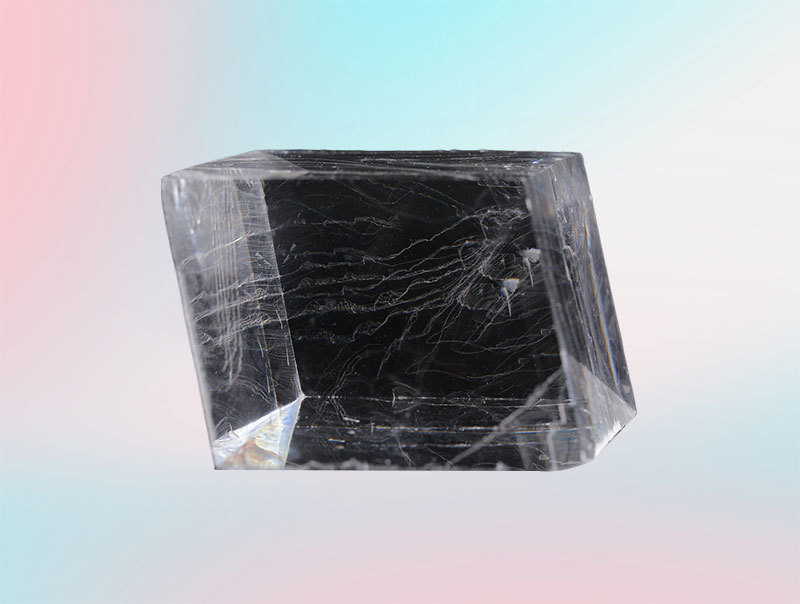
The Advantages of Using Birefringent Crystals in Optical Engineering
outline: The Advantages of Using Birefringent Crystals in Optical Engineering Table of Contents 1. Introduction to Birefringent Crystals 2. Understanding Birefringence 3. Unique Properties of Birefringent Crystals 4. Applications of Birefringent Crystals in Optical Engineering 4.1 Wave Plates 4.2 Polarizers 4.3 Interferometer
2025-12-16
Understanding Polarizing Optics: Enhancing Visual Clarity in Electronics
outline: Polarizing optics is a fascinating field that deals with the behavior of light waves as they interact with materials that can filter and manipulate light. This technology is widely used in various electronic components, especially in optoelectronic devices. Understanding the principles of polarizing optics can significantly enhance the performance of these devices, leading to clearer images and mo
2025-12-14

The Fundamentals of Optical Prism Geometry and Its Practical Applications
outline: The Fundamentals of Optical Prism Geometry and Its Practical Applications Table of Contents 1. Introduction to Optical Prisms 2. Understanding Geometric Properties of Prisms 3. Types of Optical Prisms 4. Light Refraction in Prisms 5. Applications of Optical Prisms 5.1 Prisms in Optical Instruments 5.2 Prisms in Spectroscopy 5.3 Pris
2025-12-12