
Innovative Applications of Birefringent Crystals in the Electronics Industry
Release Time:
2026-03-12
outline: Innovative Applications of Birefringent Crystals in the Electronics Industry Table of Contents 1. Introduction to Birefringent Crystals 2. Understanding Birefringence: The Science Behind It 3. Applications of Birefringent Crystals in Electronics 3.1 Birefringent Crystals in Display Technology 3.2 Impact on Telecommunications 3.3 Enhancement
Innovative Applications of Birefringent Crystals in the Electronics Industry
Table of Contents
- 1. Introduction to Birefringent Crystals
- 2. Understanding Birefringence: The Science Behind It
- 3. Applications of Birefringent Crystals in Electronics
- 3.1 Birefringent Crystals in Display Technology
- 3.2 Impact on Telecommunications
- 3.3 Enhancements in Optical Devices
- 4. Benefits of Using Birefringent Crystals
- 5. Future Potential of Birefringent Crystals
- 6. Challenges and Solutions in Birefringent Crystal Applications
- 7. Frequently Asked Questions
- 8. Conclusion
1. Introduction to Birefringent Crystals
Birefringent crystals are unique materials capable of splitting light into two distinct beams, each traveling at different velocities. This phenomenon, known as birefringence, occurs due to the crystal's anisotropic structure. The ability of these crystals to manipulate light has made them invaluable in various applications, particularly in the electronics industry. As we delve into the innovative uses of birefringent crystals, we will uncover their essential roles in enhancing electronic devices' functionality and performance.
2. Understanding Birefringence: The Science Behind It
The term "birefringence" originates from the Latin word "birefringens," meaning "double refracting." This optical property is observed in materials with anisotropic structures, such as calcite and quartz. When light passes through a birefringent crystal, it experiences two different indices of refraction, resulting in two separate rays—ordinarily termed the ordinary and extraordinary rays. This unique property is harnessed to develop devices that require precise light manipulation, making birefringent crystals indispensable in the electronics landscape.
3. Applications of Birefringent Crystals in Electronics
Birefringent crystals have found their way into numerous electronic applications, enhancing performance and enabling new functionalities. Below, we explore some key areas of application.
3.1 Birefringent Crystals in Display Technology
Birefringent crystals are pivotal in advanced display technologies, including liquid crystal displays (LCDs) and organic light-emitting diodes (OLEDs). In LCDs, these crystals help modulate light, allowing for more vivid colors and better contrast ratios. By utilizing birefringent materials, manufacturers can create thinner displays that consume less power while providing high-quality images. Furthermore, OLED technology benefits from birefringent crystals by enhancing light extraction efficiency, thereby improving overall display performance.
3.2 Impact on Telecommunications
In telecommunications, birefringent crystals are utilized in fiber optic systems and components, where they significantly enhance signal quality. They play a crucial role in polarization maintaining fibers, which are essential for minimizing signal degradation over long distances. By ensuring that light signals remain polarized, birefringent crystals help maintain the integrity of data transmission, making them a key element in modern telecommunication infrastructures.
3.3 Enhancements in Optical Devices
Birefringent crystals are integral to the functioning of various optical devices, such as modulators, beam splitters, and filters. These devices rely on the unique optical properties of birefringent materials to control light paths and intensities. In laser applications, birefringent crystals are used to achieve high precision in beam shaping and control, allowing for advancements in medical imaging and industrial laser systems.
4. Benefits of Using Birefringent Crystals
The adoption of birefringent crystals in electronic applications comes with numerous benefits:
- **Enhanced Optical Performance**: Birefringent crystals allow for superior light control, leading to improved image quality and color representation in displays.
- **Energy Efficiency**: Devices incorporating birefringent materials can achieve lower power consumption due to their ability to manipulate light more effectively.
- **Increased Durability**: Many birefringent crystals exhibit high resistance to environmental factors, making them suitable for various applications, from consumer electronics to industrial equipment.
- **Compact Design**: The use of lightweight, high-performance birefringent crystals supports the development of thinner and more portable electronic devices.
5. Future Potential of Birefringent Crystals
As technology continues to evolve, the potential applications of birefringent crystals in the electronics industry are vast. Future advancements may lead to:
- **Smart Materials**: Research is ongoing to develop smart birefringent materials capable of adjusting their properties in response to environmental changes or user interactions.
- **Quantum Technologies**: Birefringent crystals may play a significant role in quantum communication and computing, where precise control over light is paramount.
- **Next-Generation Displays**: Innovations in display technology, such as augmented reality (AR) and virtual reality (VR), may benefit from enhanced birefringent materials that provide immersive experiences.
6. Challenges and Solutions in Birefringent Crystal Applications
Despite their advantages, the use of birefringent crystals is not without challenges. Some common issues include:
- **Manufacturing Complexity**: Producing high-quality birefringent crystals with uniform properties can be complicated and costly.
- **Material Limitations**: Some birefringent materials are susceptible to damage from UV light or temperature changes, impacting their long-term reliability.
To address these challenges, ongoing research focuses on developing new synthesis methods and composite materials that enhance the performance and durability of birefringent crystals.
7. Frequently Asked Questions
What are birefringent crystals?
Birefringent crystals are optical materials that exhibit different refractive indices for light waves depending on their polarization and propagation direction.
How do birefringent crystals work in display technology?
In display technology, birefringent crystals modulate light to enhance color accuracy and contrast without increasing power consumption.
What is the significance of birefringent crystals in telecommunications?
Birefringent crystals are essential for maintaining the polarization of light signals in fiber optic systems, thereby ensuring the integrity of data transmission.
Are there any drawbacks to using birefringent crystals?
Yes, challenges include manufacturing complexities and susceptibility to environmental damage, but ongoing research aims to overcome these issues.
What is the future of birefringent crystals in electronics?
The future holds promising advancements for birefringent crystals, including applications in smart materials, quantum technologies, and next-generation display systems.
8. Conclusion
Birefringent crystals are transforming the electronics industry through their exceptional optical properties and versatile applications. From enhancing display technologies to advancing telecommunications and optical devices, these materials play a crucial role in modern electronics. As we continue to explore the potential of birefringent crystals, the opportunities for innovation are boundless. By overcoming existing challenges and tapping into new research, we can expect to see even more groundbreaking applications that will shape the future of the electronics landscape.
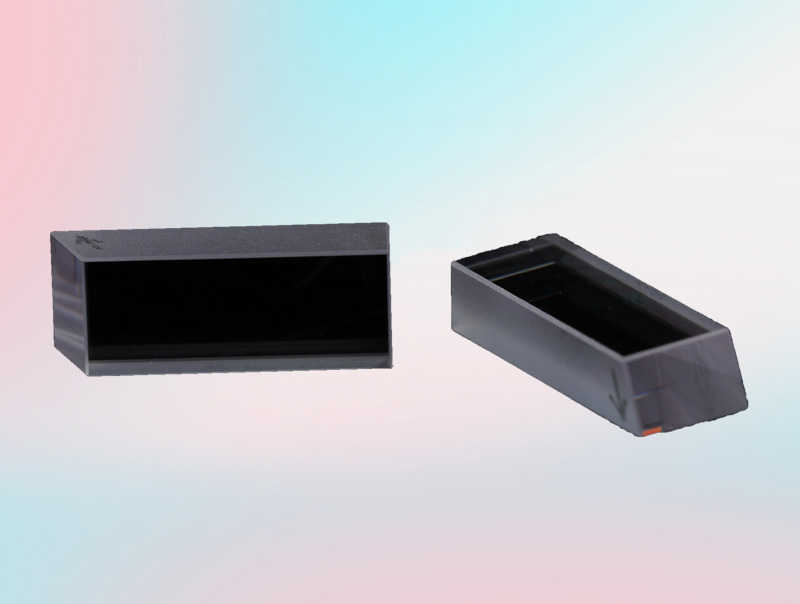
Innovative Applications of Birefringent Crystals in the Electronics Industry
outline: Innovative Applications of Birefringent Crystals in the Electronics Industry Table of Contents 1. Introduction to Birefringent Crystals 2. Understanding Birefringence: The Science Behind It 3. Applications of Birefringent Crystals in Electronics 3.1 Birefringent Crystals in Display Technology 3.2 Impact on Telecommunications 3.3 Enhancement
2026-03-12

Understanding Polarizing Optics: Unlocking the Secrets of Light Manipulation
outline: Polarizing optics is a branch of optics that focuses on the manipulation of light waves to enhance visibility and reduce unwanted reflections. Light can be described as a wave that oscillates in various directions; however, when light waves are polarized, they oscillate predominantly in one direction. This phenomenon is essential in various applications, particularly in electronic components and o
2026-03-10
Optical Prisms in Defense Technologies: An In-Depth Overview
outline: Optical Prisms in Defense Technologies: An In-Depth Overview Table of Contents 1. Introduction to Optical Prisms 2. What Are Optical Prisms? 3. Types of Optical Prisms Used in Defense 3.1 Right Angle Prisms 3.2 Penta Prisms 3.3 Dove Prisms 4. Mission-Critical Applications of Optical Prisms 4.1 Surveillance Systems 4.2 Targeting Systems 4.
2026-03-08