
Understanding Birefringent Crystals: The Key to Optical Applications in Electronics
Release Time:
2026-04-18
outline: Birefringent crystals are materials that exhibit different refractive indices along different crystallographic axes, leading to the phenomenon known as birefringence. This characteristic allows these crystals to split incoming light into two distinct rays, each traveling at different speeds and in different directions. The difference in refractive indices can result in a variety of optical effects
One of the primary uses of birefringent crystals is in optical modulators and filters. These devices exploit the unique properties of birefringent materials to manipulate light, enabling the control of polarization, intensity, and phase of light waves. For instance, in telecommunications, birefringent crystals can enhance signal integrity and reduce noise in optical fibers, contributing to more efficient data transmission.
In addition to their role in optical communication, birefringent crystals are essential in the field of imaging systems. They are often used in polarizing microscopes, where they help enhance contrast and resolution by filtering specific wavelengths of light. This application is particularly important in materials science and biological research, where understanding the structural properties of specimens is crucial.
Moreover, birefringent crystals are widely utilized in laser technology. By incorporating these materials into laser systems, manufacturers can produce high-quality, polarized laser beams that are essential for various industrial and scientific applications. This capability is especially vital in fields such as laser machining, medical laser treatments, and even in certain entertainment technologies, where precision and control of light are paramount.
The integration of birefringent crystals in electronic devices is not limited to traditional optics; they are increasingly being explored in modern technologies such as liquid crystal displays (LCDs) and light-emitting diodes (LEDs). In LCDs, for example, birefringent materials help control the light polarization, improving display quality and energy efficiency. Similarly, in LED applications, these crystals can optimize light extraction, enhancing the performance of illumination systems.
In conclusion, birefringent crystals represent a fascinating intersection of materials science and optical engineering. Their distinctive optical properties make them invaluable in a broad range of electronic and photonic applications, from telecommunications to imaging and display technologies. Understanding the role of birefringent crystals can help professionals in the electronics industry harness their potential to innovate and improve existing technologies.

Understanding Birefringent Crystals: The Key to Optical Applications in Electronics
outline: Birefringent crystals are materials that exhibit different refractive indices along different crystallographic axes, leading to the phenomenon known as birefringence. This characteristic allows these crystals to split incoming light into two distinct rays, each traveling at different speeds and in different directions. The difference in refractive indices can result in a variety of optical effects
2026-04-18
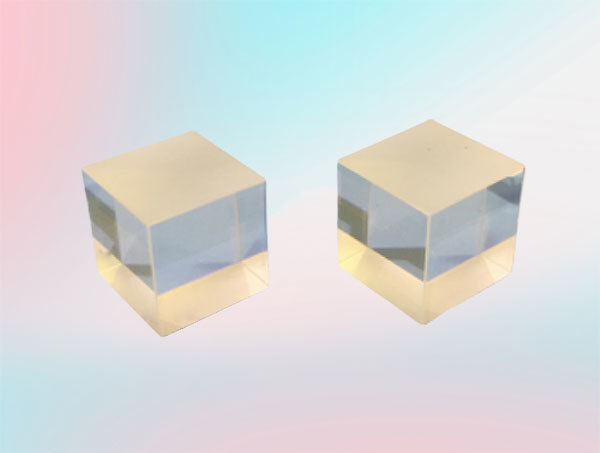
Top Trends in Polarizing Optics for Emerging Technologies
outline: Top Trends in Polarizing Optics for Emerging Technologies Polarizing optics is a pivotal component in a wide range of applications, from consumer electronics to advanced industrial systems. As we delve into the world of emerging technologies, understanding the latest trends in polarizing optics not only helps us stay ahead in the industry but also informs future innovations. This article explores
2026-04-15

The Fascinating World of Optical Prisms: Understanding Their Role in Photonics
outline: Optical prisms are essential elements in the field of photonics, playing a crucial role in manipulating and controlling light. Their unique ability to bend, reflect, and disperse light makes them invaluable in various applications ranging from simple optical instruments to complex imaging systems. At its core, an optical prism is a transparent optical element with flat, polished surfaces that refr
2026-04-12