
The Future of Birefringent Crystals in Optoelectronic Applications: Unlocking New Possibilities
Release Time:
2026-06-02
outline: The Future of Birefringent Crystals in Optoelectronic Applications Table of Contents 1. Introduction to Birefringent Crystals 2. Understanding Birefringence: The Science Behind the Phenomenon 3. Optical Properties of Birefringent Crystals 4. Current Applications of Birefringent Crystals in Optoelectronics 5. Future Potential of Birefringent Crystals in Emerging Technologies 6. Challen
The Future of Birefringent Crystals in Optoelectronic Applications
Table of Contents
- 1. Introduction to Birefringent Crystals
- 2. Understanding Birefringence: The Science Behind the Phenomenon
- 3. Optical Properties of Birefringent Crystals
- 4. Current Applications of Birefringent Crystals in Optoelectronics
- 5. Future Potential of Birefringent Crystals in Emerging Technologies
- 6. Challenges and Limitations of Birefringent Crystals
- 7. Innovative Solutions to Overcome Challenges
- 8. Conclusion: Embracing the Future of Birefringent Crystals
- 9. Frequently Asked Questions (FAQs)
1. Introduction to Birefringent Crystals
Birefringent crystals are optical materials that exhibit unique properties, allowing them to split light into two distinct rays when it passes through. This phenomenon, known as birefringence, results from the crystal structure and the anisotropic nature of the material. Birefringent crystals have garnered significant attention in the field of optoelectronics, where their ability to manipulate light is harnessed for various applications. As we look to the future, understanding the role of birefringent crystals in optoelectronics becomes increasingly essential.
2. Understanding Birefringence: The Science Behind the Phenomenon
Birefringence occurs when a crystal exhibits two different refractive indices based on the polarization direction of the incoming light. This characteristic is primarily attributed to the arrangement of atoms within the crystal lattice. When light enters a birefringent material, it is divided into two polarized beams, each traveling at a different speed. This phenomenon is vital for various applications, including optical filters, wave plates, and modulators.
The primary types of birefringent crystals include:
- **Uniaxial Crystals**: These have one optical axis and exhibit two refractive indices.
- **Biaxial Crystals**: These possess two optical axes, resulting in three refractive indices.
Understanding these distinctions is crucial for selecting the appropriate birefringent material for specific applications in optoelectronics.
3. Optical Properties of Birefringent Crystals
The optical properties of birefringent crystals make them indispensable in optoelectronic applications. Key properties include:
- **Refractive Index Variability**: The ability to manipulate the refractive index allows for the design of specialized optical devices.
- **Phase Shift**: Birefringent materials can introduce a phase shift between the two polarized light beams, which is crucial for applications like phase modulation and beam steering.
- **Polarization Control**: Birefringent crystals can filter and manipulate the polarization state of light, making them ideal for use in optical communication systems.
These properties enable the development of advanced optoelectronic devices that leverage light's behavior in innovative ways.
4. Current Applications of Birefringent Crystals in Optoelectronics
Birefringent crystals are currently utilized in various optoelectronic applications, demonstrating their versatility and effectiveness. Some of the notable applications include:
- **Optical Imaging Systems**: Birefringent crystals are employed in polarizing filters within imaging systems, enhancing contrast and reducing glare for clearer images.
- **Telecommunications**: In fiber optics, birefringent materials optimize signal transmission by improving polarization stability, thereby minimizing signal loss.
- **Laser Technology**: Birefringent crystals are used in laser systems to control beam polarization and improve output efficiency.
- **Display Technologies**: In LCDs and other display technologies, birefringent materials contribute to better color accuracy and image quality by managing light polarization.
These applications underscore the critical role of birefringent crystals in shaping modern optoelectronic devices.
5. Future Potential of Birefringent Crystals in Emerging Technologies
As technology advances, the potential for birefringent crystals in optoelectronic applications continues to expand significantly. Future developments may include:
- **Quantum Computing**: Birefringent materials could play a vital role in quantum information processing by enabling precise control of quantum states through polarization manipulation.
- **Enhanced Photonic Devices**: Future optoelectronic devices may leverage birefringent crystals for improved efficiency, miniaturization, and functionality in applications like sensors and imaging systems.
- **Smart Materials**: Integration of birefringent crystals with smart materials could lead to the development of responsive optical devices that adapt to environmental changes in real-time.
These advancements showcase the exciting possibilities for birefringent crystals in shaping the future of optoelectronics.
6. Challenges and Limitations of Birefringent Crystals
Despite their numerous advantages, the use of birefringent crystals in optoelectronics is not without challenges. Some of the significant hurdles include:
- **Manufacturing Complexity**: Producing high-quality birefringent crystals requires precise control over the crystal growth process, which can be technically demanding and costly.
- **Temperature Sensitivity**: Birefringent crystals can be sensitive to temperature fluctuations, affecting their optical properties and performance in various applications.
- **Limited Material Availability**: Certain birefringent materials may be scarce or difficult to source, presenting challenges for widespread adoption in commercial products.
Addressing these challenges is essential to fully realize the potential of birefringent crystals in future optoelectronic applications.
7. Innovative Solutions to Overcome Challenges
To overcome the limitations associated with birefringent crystals, researchers and engineers are exploring innovative solutions, including:
- **Advanced Manufacturing Techniques**: Implementing new techniques such as 3D printing and nanofabrication can streamline the production of birefringent crystals, reducing costs and improving quality.
- **Composite Materials**: Developing composite materials that combine birefringent crystals with other materials can enhance temperature stability and broaden application possibilities.
- **Research and Development Initiatives**: Increased investment in research and development can lead to the discovery of new birefringent materials with enhanced properties and reduced manufacturing challenges.
These solutions have the potential to pave the way for wider adoption and integration of birefringent crystals in optoelectronic technologies.
8. Conclusion: Embracing the Future of Birefringent Crystals
Birefringent crystals represent a vital area of exploration within the realm of optoelectronics. Their unique optical properties and versatility make them a cornerstone for current and future technological advancements. As industries continue to demand more efficient, compact, and innovative optical solutions, the role of birefringent crystals will undoubtedly expand. By embracing new manufacturing techniques and addressing existing challenges, we can unlock the full potential of these remarkable materials, ultimately steering the future of optoelectronic applications into uncharted territories.
9. Frequently Asked Questions (FAQs)
1. What are birefringent crystals?
Birefringent crystals are optical materials that exhibit two different refractive indices, allowing them to split light into two polarized beams based on the light's polarization direction.
2. What are the main applications of birefringent crystals?
Birefringent crystals are used in optical imaging systems, telecommunications, laser technology, and display technologies to enhance performance and improve image quality.
3. How do birefringent crystals affect light?
Birefringent crystals affect light by introducing a phase shift between polarized beams and controlling the polarization state, which is critical for various optical applications.
4. What challenges are associated with using birefringent crystals?
Challenges include manufacturing complexity, temperature sensitivity, and limited material availability, which can impact their performance and widespread adoption.
5. What is the future potential for birefringent crystals in technology?
The future potential includes applications in quantum computing, enhanced photonic devices, and the development of smart materials that respond dynamically to environmental changes.
By exploring the future of birefringent crystals and addressing current challenges, we can continue to advance the field of optoelectronics and unlock new technological frontiers.
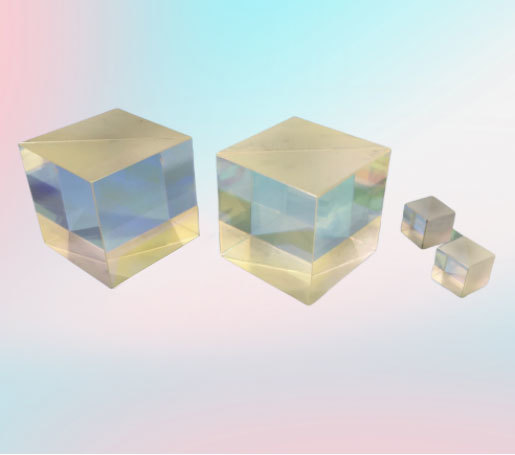
Understanding Polarized Optical Components: Their Role in Modern Optoelectronics
outline: Polarized optical components are essential elements in the field of optoelectronics, playing a pivotal role in manipulating light in ways that enhance the performance and functionality of various optical devices. These components, which include polarizers, beam splitters, and optical filters, are designed to control the orientation and intensity of light waves. By understanding the principles behi
2026-09-03
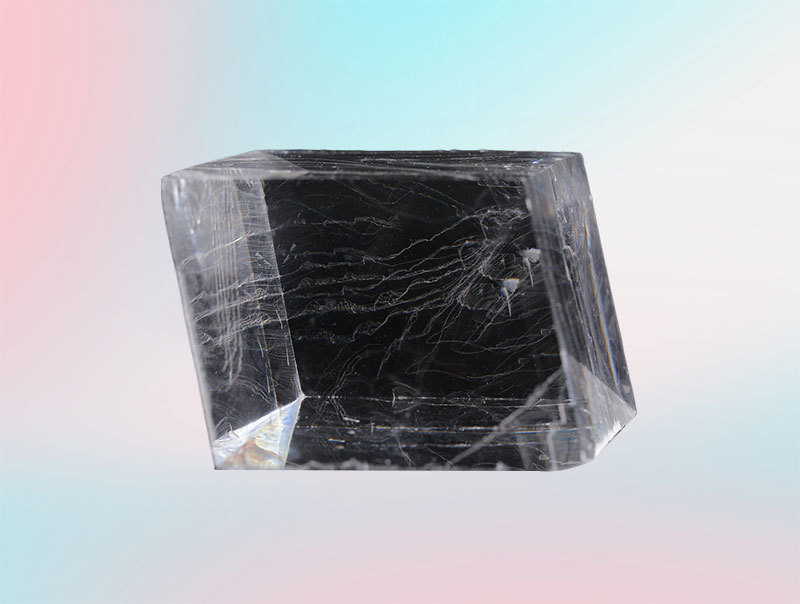
Understanding Birefringent Crystals: A Comprehensive Guide for Electronics Enthusiasts
outline: Understanding Birefringent Crystals: A Comprehensive Guide for Electronics Enthusiasts Table of Contents What Are Birefringent Crystals? Properties of Birefringent Crystals Types of Birefringent Crystals Applications of Birefringent Crystals in Electronics Manufacturing Processes for Birefringent Crystals Future Trends and Innovations in Birefringent Crystals Common Mi
2026-08-31

Understanding Polarizing Optics: A Key Component in Photonic Devices
outline: Polarizing optics is an essential area of study within the realm of photonics, focusing on the manipulation of light waves based on their polarization states. Polarization refers to the orientation of light waves as they oscillate; light can be unpolarized (with waves oscillating in multiple directions) or polarized (with waves oscillating in a single direction). This characteristic is crucial in
2026-08-28
