
Optical Mirrors: Precision Engineering for Modern Science and Technology
Release Time:
2026-01-04
outline: Optical mirrors are precision reflective surfaces used to direct, focus, or manipulate light in lasers, telescopes, and optical systems
Optical mirrors are among the most critical components in modern optical systems, playing an essential role in directing, focusing, and manipulating light with high precision. Used across a wide range of industries, including aerospace, telecommunications, medical imaging, laser technology, astronomy, and industrial manufacturing, optical mirrors enable applications that require exact control of light paths and minimal distortion. As technology advances, the demand for high-quality optical mirrors continues to grow, driven by innovations in research, defense, and consumer electronics.
At their core, optical mirrors are reflective surfaces designed to redirect light without significant loss of intensity or quality. They are fabricated from high-purity substrates such as optical glass, fused silica, or specialized metals, and coated with reflective materials like aluminum, silver, or multilayer dielectric coatings. These coatings enhance reflectivity across specific wavelength ranges, protect the substrate from environmental damage, and maintain optical performance under varying conditions. Depending on the application, mirrors can be flat, concave, convex, or custom-shaped to meet stringent design requirements.
The precision of optical mirrors is crucial for systems where even minor surface imperfections can impact performance. In laser applications, for example, surface flatness and smoothness are critical to prevent beam distortion, scattering, or energy loss. High-quality mirrors ensure that laser beams are accurately steered, focused, and combined, enabling applications such as material processing, medical surgeries, and scientific research. Similarly, in astronomical telescopes, mirrors must maintain precise curvature and reflectivity to capture faint celestial objects and produce high-resolution images. Optical mirrors are also integral to microscopes, spectrometers, and interferometers, where they enable precise imaging, light splitting, and path control.
Technological advancements have expanded the capabilities of optical mirrors. Modern fabrication techniques include ultra-precision polishing, computer-controlled surface shaping, ion-beam figuring, and advanced coating deposition. These methods achieve surface roughness on the nanometer scale and uniform coatings that ensure consistent performance. Environmental resistance, such as thermal stability and protection against humidity or dust, is also a key consideration, particularly in aerospace, defense, and outdoor astronomical applications.
Applications of optical mirrors are diverse and impactful. In telecommunications, mirrors are used in fiber-optic systems, signal routing, and high-speed data transmission. In medical imaging and diagnostics, they support devices like endoscopes, OCT systems, and laser treatment equipment. Industrial applications include laser cutting, 3D printing, and precision measurement systems. Moreover, defense and aerospace rely on mirrors for targeting, imaging, and optical guidance, where performance and reliability are paramount.
Customization is another strength of optical mirror technology. Mirrors can be tailored in terms of size, shape, coating type, and reflectivity to meet the unique needs of each application. Engineers can design mirrors for broad or narrow wavelength ranges, for high-power lasers, or for environments with extreme temperatures and pressures. This adaptability has driven innovation in multiple fields, from cutting-edge scientific research to consumer electronics, enabling new optical solutions that were previously impossible.
Sustainability and durability are increasingly important in mirror manufacturing. High-quality optical mirrors are designed to last for decades without significant degradation in performance. Coatings are often chosen for their long-term stability, scratch resistance, and ability to withstand environmental stressors. Additionally, careful material selection and manufacturing processes reduce waste and enhance energy efficiency, supporting green manufacturing initiatives in optical industries.
Looking forward, the role of optical mirrors is poised to grow as technology evolves. Emerging fields such as quantum computing, high-power lasers, adaptive optics, and autonomous vehicles rely heavily on precision optical components. Mirrors are being integrated with smart sensors, adaptive surfaces, and real-time monitoring systems to enable intelligent optical devices. The continuous innovation in optical mirror design and fabrication ensures that they remain indispensable tools for science, industry, and technology.
In conclusion, optical mirrors are more than just reflective surfaces—they are precision-engineered components that enable modern science, industry, and technology to function at the highest levels. Their combination of optical accuracy, durability, adaptability, and performance makes them critical to applications ranging from space exploration to medical imaging, industrial processing, and telecommunications. As industries advance and optical technologies evolve, high-quality mirrors will continue to be at the forefront of innovation, ensuring precise control of light for years to come.

The Intricacies and Applications of Polarized Optical Components in Photonics
outline: Polarized optical components play a pivotal role in the field of photonics, enabling the control and manipulation of light in various applications. These components are designed to filter, reflect, and transmit light waves based on their polarization state, enhancing the performance of optical systems. The primary function of polarized optical components is to separate light waves into distinct po
2026-02-02

Polarizing Optics Drive New Advances in Precision Imaging and Photonics
outline: Polarizing optics control light polarization to reduce glare, enhance contrast, and enable precise analysis in optical and photonic systems
2026-02-02
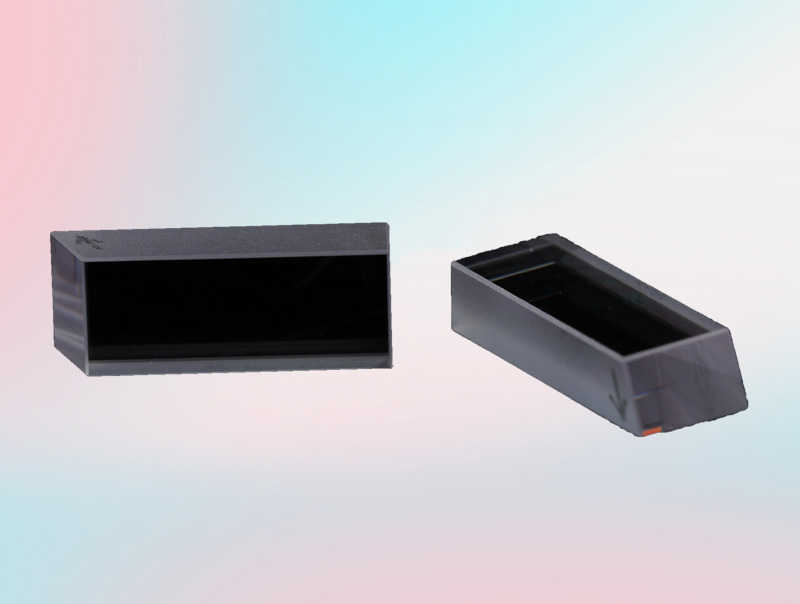
How Birefringent Crystals Impact the Performance of Light-Based Technologies
outline: How Birefringent Crystals Impact the Performance of Light-Based Technologies Introduction to Birefringent Crystals Birefringent crystals, defined by their unique optical properties, exhibit a phenomenon wherein light is refracted into two distinct rays when passing through them. This property arises from the anisotropic nature of the crystal structure, which leads to different light velocities
2026-01-31